 AnatomyCompass
Bicipital tenosynovitis
Inflammatory · Dog
Inflammation of the tendon of origin of the biceps brachii and its synovial sheath in the intertubercular groove of the humerus. A common cause of chronic, intermittent thoracic limb lameness in middle-aged active dogs.
Key points
- The tendon arises from the supraglenoid tubercle and runs in the intertubercular groove.
- It lies inside the shoulder joint, so its diseases and those of the joint are closely linked.
- The key finding is pain on the biceps test.
- The test flexes the shoulder with the elbow extended while pressing on the tendon in the groove.
- If conservative treatment fails, a biceps tenotomy or tenodesis is performed.
What it is
Bicipital tenosynovitis is inflammation of the tendon of origin of the biceps brachii and of the synovial sheath that surrounds it.
It usually results from repetitive strain or partial tears of the tendon, and the tendon may become mineralised.
It may also be secondary to other shoulder diseases:
- osteochondral fragments from osteochondritis dissecans that lodge in the sheath
- enlargement of the nearby supraspinatus tendon, which impinges on the sheath
Who it affects
Active dogs of large breeds, middle-aged to older.
Anatomy involved
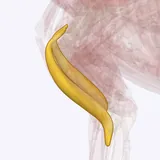
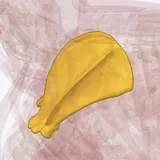
The biceps brachii (m. biceps brachii) arises from the supraglenoid tubercle of the scapula.
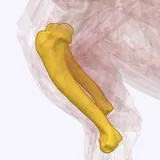
Its tendon crosses the shoulder joint and runs distally in the intertubercular groove of the humerus, between the greater and lesser tubercles.
The tendon of origin lies inside the shoulder joint, so diseases of the joint and of the tendon are closely linked.
The muscle inserts on the radial and ulnar tuberosities. It flexes the elbow and extends the shoulder.
Clinical signs
Chronic, intermittent thoracic limb lameness, often subtle, that worsens after exercise.
The key finding is pain on the biceps test. The shoulder is flexed while the elbow is extended, pressing directly on the tendon in the intertubercular groove.
Muscle atrophy may develop in long-standing cases.
Diagnosis
- Orthopaedic examination with the biceps test.
- Shoulder radiographs show osteophytes of the groove and mineralisation within the tendon or sheath.
- Ultrasound, arthrography, MRI or arthroscopy assess the tendon and sheath directly.
- Joint fluid analysis.
Treatment
Conservative treatment comes first:
- rest and controlled exercise
- NSAIDs
- physiotherapy
- in more severe cases, an intra-articular or peritendinous corticosteroid injection
Dogs that do not respond, or that have a substantial tear, are treated surgically. The options are:
- biceps tenotomy, often arthroscopic, which relieves pain
- tenodesis, which reattaches the tendon to the proximal humerus
Prognosis is good with either approach.
Structures affected
References
- Fossum TW. Small Animal Surgery, 5th ed. Elsevier (2018)
- Piermattei DL, Flo GL, DeCamp CE. Brinker, Piermattei and Flo's Handbook of Small Animal Orthopedics and Fracture Repair, 4th ed. Saunders (2006)
- Johnston SA, Tobias KM. Veterinary Surgery: Small Animal, 2nd ed. Elsevier (2018)
- Merck Veterinary Manual: Muscular Trauma in Dogs and Cats
- Lane D, Schiller T. Technique description: Incisionless ultrasound-assisted biceps tenotomy in dogs. Open Vet J 10:457-464 (2021)
- Kim H, Kim AY, Kang BJ. Insertional biceps tendinopathy palliated successfully with intra-articular triamcinolone acetonide injection in a dog: a case report. Vet Med Sci 9:1488-1494 (2023)
- Allan G, Davies S. Radiographic signs of joint disease in dogs and cats. In: Thrall DE, Textbook of Veterinary Diagnostic Radiology, 7th ed. Elsevier (2018)
See it in 3D on your iPhone
Peel the layers, spin the model, quiz yourself on it and stand it on your desk in AR. AnatomyCompass is coming to iPhone, iPad and Mac: get one email when it’s out.
Text adapted from Vet Atlas (CC BY-SA 4.0). Sources and licences. This veterinary text has not yet been reviewed by a veterinarian.