 AnatomyCompass
Brachycephalic obstructive airway syndrome
Congenital · Dog, Cat
Upper airway obstruction caused by the shortened skull of brachycephalic breeds. Stenotic nares, an elongated, thickened soft palate and a hypoplastic trachea raise airway resistance and lead to secondary laryngeal collapse.
Key points
- The negative pressure needed to breathe causes secondary changes such as saccule eversion and laryngeal collapse.
- A hypoplastic trachea is seen mainly in English bulldogs.
- Surgery is best done early, before the secondary changes develop.
- The procedures are alarplasty, staphylectomy and resection of everted saccules.
- In the Persian cat, the most consistent finding is stenotic nares.
What it is
Brachycephalic obstructive airway syndrome (BOAS) is a set of anatomical abnormalities that results from selecting for a short muzzle. The bones of the face are shortened, but the soft tissues are not reduced to the same extent and are crowded into a smaller space.
The primary components are:
- stenotic nares
- an elongated, thickened soft palate
- aberrant nasal turbinates, which obstruct the nasal cavity and nasopharynx
- macroglossia
- a hypoplastic trachea
Breathing through these obstructions takes more negative pressure, which causes secondary changes:
- eversion of the laryngeal saccules
- tonsillar eversion
- progressive laryngeal collapse
Gastrointestinal signs are frequently associated: regurgitation, vomiting and hiatal hernia.
Who it affects
Brachycephalic breeds: English bulldog, French bulldog, pug, Boston terrier, Pekingese and others.
Signs are often evident from a young age and worsen with time, obesity and heat.
Anatomy involved
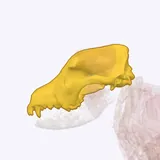
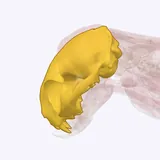
The root of the syndrome is the conformation of the skull: a shortened facial skeleton with a short nasal cavity.
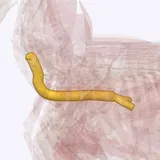
In the nostrils, nasal cavity and nasopharynx, the nares are narrow and the turbinates aberrant.
The soft palate overlaps the epiglottis and obstructs the laryngeal entrance.
The larynx shows everted saccules and, in advanced cases, laryngeal collapse.
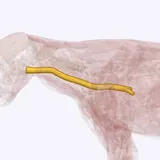
A hypoplastic trachea has small, rigid cartilage rings. It is seen mainly in English bulldogs.
Clinical signs
- snoring and stertor
- inspiratory stridor
- open-mouth breathing
- exercise and heat intolerance
- sleep-disordered breathing and sleeping in a sitting position
- gagging and retching
Severe cases show cyanosis, syncope and life-threatening crises with hyperthermia, especially in hot weather or under stress.
Aspiration pneumonia and pulmonary oedema may complicate them.
Diagnosis
- Physical examination shows stenotic nares and noisy breathing. Signs before and after exercise and functional exercise tolerance tests help grade it.
- Upper airway assessment under anaesthesia, oral, laryngeal and endoscopic, assesses the soft palate, saccules, tonsils and the degree of laryngeal collapse.
- Thoracic imaging looks for aspiration pneumonia as part of the work-up before surgery.
- Endoscopy and CT show aberrant turbinates and nasopharyngeal obstruction.
Treatment
Weight control and avoiding heat and strenuous exercise in all cases.
Surgical correction is best done early, before secondary changes develop:
- alarplasty, to widen the nares
- staphylectomy or folded-flap palatoplasty, to shorten and thin the soft palate
- resection of everted saccules
- resection of obstructing turbinate tissue, in selected cases
In severe laryngeal collapse, tracheostomy is a salvage procedure.
Because the problem is conformational, breeding toward a longer muzzle is the long-term solution.
In the cat
Brachycephalic cats such as the Persian have a similar syndrome. The other airway abnormalities seen in dogs, such as laryngeal collapse, are rarely observed.
Airway
The most consistent finding is stenotic nares. Some cats also have an elongated soft palate and aberrant nasal turbinates. Brachycephaly has been associated with more respiratory noise and signs.
Beyond the airway
Extreme shortening of the face also causes:
- distortion of the nasolacrimal duct, with poor tear drainage and tear staining
- prominent eyes that lie partly outside the bony orbit
- dental malformations and displaced teeth
- skull malformations with internal hydrocephalus, in the flattest-faced Persians
Treatment
Cats with very narrow nares benefit from surgical widening. As in the dog, the long-term solution is selecting less extreme faces.
Key studies in the cat
- Schlueter et al. (2009). CT and anatomical study of 31 brachycephalic and 15 mesocephalic cats. The more brachycephalic the head, the more the facial bones and upper canine teeth are rotated dorsally. In severe cases the nasolacrimal duct is forced into a steep, V-shaped course under the canine tooth and seems to drain poorly.
- Farnworth et al. (2016). Owner survey of 1000 cats with facial measurements taken from photographs. A shorter muzzle and a higher position of the nose were associated with more respiratory noise during sleep and more breathing difficulty after activity, and that respiratory score was also associated with tear staining. Signs were reported by owners.
- Schmidt et al. (2017). CT of 92 Persian and 10 domestic shorthair cats. Persians with extreme brachycephaly ("peke-face") had shorter nasal bones and malformations of the skull and teeth, and much larger cerebral ventricles than less brachycephalic ("doll-face") Persians, with a ventricle to brain ratio of 0.159 versus 0.015.
- Sieslack et al. (2021). CT of 69 Persian and 10 domestic shorthair cats. Higher grades of brachycephaly were associated with more of the eyeball lying outside the bony orbit, a lower bony nasal aperture and more displacement of the upper premolars, while other measurements of the nasal airway did not correlate. Some Persians overlapped with the domestic shorthairs.
- Gleason et al. (2023). Owner questionnaire on 194 brachycephalic and 1003 non-brachycephalic cats. Brachycephalic cats more often snored (odds ratio 6.9), had nasal discharge (8.3), dyspnoea (5.3) and difficulty chewing (5.2), became dyspnoeic sooner during activity and recovered more slowly. Signs were reported by owners.
Structures affected
References
- Packer RMA, Hendricks A, Tivers MS, Burn CC. Impact of facial conformation on canine health: brachycephalic obstructive airway syndrome. PLoS One 10(10):e0137496 (2015)
- Fossum TW. Small Animal Surgery, 5th ed. Elsevier (2018)
- Farnworth MJ, Chen R, Packer RMA, et al. Flat feline faces: is brachycephaly associated with respiratory abnormalities in the domestic cat (Felis catus)? PLoS One 11:e0161777 (2016)
- Schmidt MJ, Kampschulte M, Enderlein S, et al. The relationship between brachycephalic head features in modern Persian cats and dysmorphologies of the skull and internal hydrocephalus. J Vet Intern Med 31:1487-1501 (2017)
- Schlueter C, Budras KD, Ludewig E, et al. Brachycephalic feline noses: CT and anatomical study of the relationship between head conformation and the nasolacrimal drainage system. J Feline Med Surg 11:891-900 (2009)
- Sieslack J, Farke D, Failing K, et al. Correlation of brachycephaly grade with level of exophthalmos, reduced airway passages and degree of dental malalignment in Persian cats. PLoS One 16:e0254420 (2021)
- Gleason HE, Phillips H, McCoy AM. Influence of feline brachycephaly on respiratory, gastrointestinal, sleep, and activity abnormalities. Vet Surg 52:435-445 (2023)
- Mitze S, Barrs VR, Beatty JA, Hobi S, Bęczkowski PM. Brachycephalic obstructive airway syndrome: much more than a surgical problem. Vet Q 42:213-223 (2022)
- Rahimdoust Mozhdehi N, Salari Sedigh H, Kazemi Mehrjerdi H. Surgical correction of stenotic nares using a single pedicle advancement flap technique in three brachycephalic cats. Vet Med Sci (2023)
- Merck Veterinary Manual: Laryngeal Disorders in Animals
See it in 3D on your iPhone
Peel the layers, spin the model, quiz yourself on it and stand it on your desk in AR. AnatomyCompass is coming to iPhone, iPad and Mac: get one email when it’s out.
Text adapted from Vet Atlas (CC BY-SA 4.0). Sources and licences. This veterinary text has not yet been reviewed by a veterinarian.