 AnatomyCompass
Bovine brucellosis
Infectious · Cow
Infection with Brucella abortus that causes abortion in the second half of gestation, retained placenta and orchitis in bulls, and that persists in the udder and is shed in milk. It is a zoonosis subject to official reporting and is controlled by official programmes of serological testing, slaughter of positive animals and vaccination.
Key points
- After the first abortion the cow stays infected and sheds the bacterium at later calvings and in milk.
- Some heifers develop a latent infection, often seronegative, that shows in their first pregnancy.
- The Rose Bengal test is used for screening and complement fixation for confirmation.
- Yersinia enterocolitica O:9 can cause false positives on serology.
- The RB51 vaccine does not interfere with standard serology, but is resistant to rifampicin.
What it is
Bovine brucellosis is caused by Brucella abortus, a Gram-negative coccobacillus.
Cattle are infected mainly by ingestion or by mucosal contact through the mouth or conjunctiva. The infectious material is aborted fetuses, placentas, uterine discharges and pasture or water contaminated by them.
Venereal transmission is of little importance, except through artificial insemination with infected semen.
After a short bacteraemia the bacterium localises in the pregnant uterus, the udder and the male genital tract. In the placenta it causes a placentitis that leads to abortion or the birth of weak calves.
After the first abortion most cows carry subsequent pregnancies to term. But they remain infected and can shed the bacterium at later calvings and in milk for years, most of them for life.
Some heifers infected in utero or while nursing develop a latent infection, often seronegative, that becomes apparent in their first pregnancy.
Zoonosis
It is an important zoonosis. People are infected:
- by consuming raw milk and unpasteurised fresh cheese
- by contact with aborted fetuses, placentas and discharges
- by accidental self-injection of live vaccines
It is an occupational disease of farmers, veterinarians, and abattoir and laboratory workers.
In humans it causes undulant fever: recurrent fever, sweating, joint and muscle pain and, in some cases, osteoarticular complications, orchitis or endocarditis.
Where brucellosis is common, a high proportion of human cases are thought to be due to B. melitensis, but B. abortus from cattle also causes human disease.
Control in animals and pasteurisation of milk are the basis of prevention in people, under a One Health approach.
Who it affects
Cattle. The disease shows above all in pregnant females, and spreads fastest in unvaccinated herds. Infection in non-pregnant cows is usually asymptomatic.
Herds become infected by buying infected animals or through contact with neighbouring herds.
Several countries are officially free; in other regions it is endemic.
Buffalo, bison and some wild ruminants can act as reservoirs.
Anatomy involved
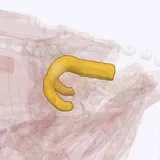
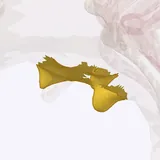
In the uterus, the bacterium colonises the placenta and causes a placentitis. The placenta is oedematous and covered with exudate, the intercotyledonary areas are often thickened and some placentomes show necrosis and haemorrhage.
The placentitis causes abortion in the second half of gestation, weak calves, retained placenta and metritis. The fetus, placenta and lochia contain huge numbers of bacteria and are the main source of infection.
In the udder, B. abortus persists in the mammary gland and the supramammary lymph nodes, often for the animal's whole life. It does not usually cause signs of mastitis.
The bacterium is shed in milk intermittently. This is why raw milk is a risk for people and why bulk-tank milk is used for herd surveillance.
Clinical signs
- abortion in the second half of gestation, often as the only sign; "abortion storms" in newly infected herds
- retained placenta, metritis and reduced fertility
- birth of weak or dead calves
- in bulls, orchitis and epididymitis, sometimes seminal vesiculitis, with infertility
- hygromas and arthritis, especially in long-standing infections
General condition is usually good, and many infected animals show no signs.
Diagnosis
Serology
This is the basis of official programmes:
- the Rose Bengal test, for screening
- complement fixation, for confirmation
- indirect or competitive ELISA
- the fluorescence polarisation assay
False-positive reactions can occur because of Yersinia enterocolitica O:9.
Milk
The milk ring test and ELISA on bulk-tank milk are used for surveillance of dairy herds.
Direct diagnosis
Bacterial culture or PCR of abomasal contents and lung of the aborted fetus, the placenta, uterine discharges or milk. Samples must be handled with biosafety precautions.
Suspected cases must be reported according to national regulations.
Treatment and control
Cattle are not treated:
- there is no practical treatment
- the bacterium can persist in lymph nodes and other tissues after antibiotics
- treated animals remain a risk to people
The disease is notifiable, and control follows official programmes:
- test and slaughter of positive animals, with movement restrictions on affected herds and testing and quarantine of replacement animals
- calving hygiene, which means promptly removing and destroying placentas, aborted fetuses and contaminated bedding, and cleaning and disinfecting contaminated areas
- vaccination in endemic areas, mainly of young heifer calves
- pasteurisation of milk and protection of exposed workers
Vaccines
S19 can induce antibodies that interfere with serology, especially when adult animals are vaccinated.
RB51 is a rough strain that does not induce the antibodies detected by standard serological tests, so it does not interfere with them. With some ELISAs, however, it cannot always be told apart from infection.
Both are live vaccines that can infect people. RB51 is resistant to rifampicin, one of the antibiotics used to treat humans.
Vaccination is stopped near the end of eradication campaigns to avoid false-positive serological reactions.
Key studies
- Andrade et al. (2024). Systematic review of 71 studies and meta-analysis of 65, with 178 assays of 11 serological tests for bovine brucellosis. In studies without a case-control design, the highest sensitivity was for the indirect ELISA with bacterial suspension antigen (96.5%; 95% CI 94.1–97.9%) and the lowest for the 2-mercaptoethanol test (85.0%; 79.6–89.1%); the highest specificity was for the fluorescence polarisation assay (99.7%; 99.5–99.8%), which had the best overall accuracy. Including case-control studies overestimated the sensitivity and specificity of all tests.
- de Oliveira et al. (2022). Systematic review and meta-analysis of controlled experimental challenge trials of the S19 and RB51 vaccines. Against abortion (15 trials), S19 at its best dose had an RR of 0.25 (95% CI 0.12–0.52; efficacy 75.09%) and RB51 at its best dose an RR of 0.31 (0.16–0.61; efficacy 69.25%). Against infection (23 trials), only those two subgroups gave significant protection, with efficacies of 72.03% and 57.05%. Protection depended strongly on dose and was measured in experimental challenges.
- Serpa Gonçalves et al. (2025). Systematic review of 33 field trials in 17 articles (1976–2016) with S19 and RB51. 20 of the 33 trials (60.61%) showed a significant effect of vaccination, with less infection or lower prevalence in vaccinated animals. Heterogeneity precluded meta-analysis, most were cross-sectional studies and 19 of 33 applied other measures at the same time, such as slaughter of positive animals, so the effect of the vaccine alone cannot be separated.
- Dean et al. (2012). WHO-commissioned systematic review and meta-analysis of 57 studies on the clinical manifestations of human brucellosis. 78% of patients had fever, and joint (65%), muscle (47%) and back pain (45%) affected around half. One in 10 men had epididymo-orchitis, and for every 100 patients there was 1 case of endocarditis and 4 with neurological involvement. Delays in diagnosis and treatment were common.
- Laine et al. (2023). Estimate of the global incidence of human brucellosis using international public health data and three statistical models. The conservative estimate was 2.1 million cases per year, much higher than previously assumed, with most of the risk in Africa and Asia. It is a model based on incomplete surveillance data, with underdiagnosis.
- Pereira et al. (2020). Systematic review of 63 studies on brucellosis as an occupational disease. The most exposed groups were rural workers, abattoir workers, veterinarians and their assistants, laboratory staff and hunters; the main risks were direct contact with animal fluids, not using protective equipment and accidental exposure to live vaccines. In the meta-analysis of case-control studies, animal breeders, laboratory and abattoir workers had an OR of infection of 3.47 (95% CI 1.47–8.19).
Structures affected
References
- Constable PD, Hinchcliff KW, Done SH, et al. Veterinary Medicine: A textbook of the diseases of cattle, horses, sheep, pigs, and goats, 11th ed. Elsevier (2017)
- Andrade RS, Oliveira MM, Bueno Filho JSS, et al. Accuracy of serological tests for bovine brucellosis: A systematic review and meta-analysis. Prev Vet Med 222:106079 (2024)
- de Oliveira MM, Pereira CR, de Oliveira IRC, et al. Efficacy of Brucella abortus S19 and RB51 vaccine strains: A systematic review and meta-analysis. Transbound Emerg Dis 69:e32-e51 (2022)
- Serpa Gonçalves M, de Oliveira MM, Andrade RS, et al. Systematic review on the effectiveness of Brucella abortus S19 and RB51 vaccine strains in field studies. Vaccine 45:126649 (2025)
- Dean AS, Crump L, Greter H, et al. Clinical manifestations of human brucellosis: a systematic review and meta-analysis. PLoS Negl Trop Dis 6:e1929 (2012)
- Laine CG, Johnson VE, Scott HM, et al. Global Estimate of Human Brucellosis Incidence. Emerg Infect Dis 29:1789-1797 (2023)
- Pereira CR, Cotrim de Almeida JVF, Cardoso de Oliveira IR, et al. Occupational exposure to Brucella spp.: A systematic review and meta-analysis. PLoS Negl Trop Dis 14:e0008164 (2020)
- Merck Veterinary Manual: Brucellosis in Cattle
- Spickler AR. Brucellosis: Brucella abortus. Center for Food Security and Public Health, Iowa State University (2018)
See it in 3D on your iPhone
Peel the layers, spin the model, quiz yourself on it and stand it on your desk in AR. AnatomyCompass is coming to iPhone, iPad and Mac: get one email when it’s out.
Text adapted from Vet Atlas (CC BY-SA 4.0). Sources and licences. This veterinary text has not yet been reviewed by a veterinarian.