 AnatomyCompass
Colitis
Inflammatory · Dog, Cat
Inflammation of the large intestine. It causes large-bowel diarrhoea, with frequent small stools, mucus, fresh blood and tenesmus. It may be acute and self-limiting or chronic, with many possible causes.
Key points
- Weight loss is uncommon and points more to small-bowel disease.
- Acute colitis is usually self-limiting and generally needs no antibiotics.
- Chronic colitis is treated stepwise, starting with a dietary trial.
- Granulomatous colitis of boxers and French bulldogs responds to antibiotics, classically enrofloxacin.
- In young cats from catteries and shelters, think of Tritrichomonas blagburni.
What it is
Colitis is inflammation of the colonic mucosa. It reduces the colon's capacity to absorb water and store faeces, and increases mucus secretion.
It is a clinical and histological description, not a single disease.
Acute colitis
Its causes are:
- dietary indiscretion or a sudden diet change
- stress
- parasites, such as Trichuris vulpis or Giardia
- bacterial causes; Clostridium perfringens enterotoxin is suspected in some cases
- drugs
It is usually self-limiting.
Chronic colitis
It lasts more than about three weeks. Its causes are:
- food-responsive enteropathy
- antibiotic-responsive enteropathy
- immunosuppressant-responsive enteropathy (inflammatory bowel disease, usually lymphoplasmacytic)
- fibre-responsive large-bowel diarrhoea
- chronic parasitism
- granulomatous colitis (histiocytic ulcerative colitis) in boxers and French bulldogs, associated with invasive Escherichia coli
Neoplasia, such as adenocarcinoma or lymphoma, and colorectal polyps must be ruled out.
Who it affects
Dogs of any age. Most dogs with chronic colitis are middle-aged.
Acute large-bowel diarrhoea is common after dietary changes and in dogs housed in shelters.
Granulomatous colitis affects young boxers and French bulldogs.
Anatomy involved
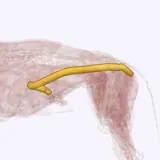
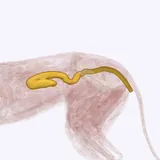
The large intestine comprises the caecum, colon and rectum. The colon absorbs water and electrolytes and stores faeces.
The inflamed mucosa loses absorptive capacity, produces more mucus and becomes irritable. This is why the rectum signals urgency even when it holds little faeces.
In granulomatous colitis the mucosa is thickened, irregular and ulcerated. The lamina propria holds macrophages laden with PAS-positive material.
Clinical signs
Large-bowel diarrhoea is characterised by:
- increased frequency, with small volumes each time
- urgency
- mucus
- fresh blood (haematochezia)
- tenesmus
Weight loss is uncommon; it is more typical of small-bowel disease. Some dogs with colitis also vomit.
Chronic cases may be intermittent.
Diagnosis
- Faecal examination, with flotation and testing for Giardia, and empirical deworming, for example with fenbendazole.
- Rectal examination detects mucosal irregularity, polyps or masses.
- In chronic cases, blood work and abdominal imaging to exclude systemic disease and neoplasia. Ultrasound assesses wall thickness and lymph nodes.
- Before more invasive tests, treatment trials with diet are run: hydrolysed or novel protein, or added fibre.
- Colonoscopy with biopsies is kept for chronic cases that do not respond. Histopathology characterises the inflammation and excludes neoplasia. Culture and fluorescence in situ hybridisation are used for granulomatous colitis.
Treatment
Acute colitis
A short period of a highly digestible diet, soluble fibre such as psyllium, and treatment of parasites. Antibiotics are generally not needed.
Chronic colitis
It is treated stepwise:
- dietary trial, with hydrolysed or novel protein or a high-fibre diet
- then probiotics
- immunosuppressants (prednisolone, budesonide, ciclosporin) when diet fails and biopsies support inflammatory bowel disease
Granulomatous colitis
It responds to antibiotics chosen by susceptibility testing, classically enrofloxacin.
The prognosis is good for acute and diet-responsive forms.
In the cat
Colitis is also common in the cat. Parasites such as Giardia are ruled out first.
Tritrichomonas blagburni
A cause specific to the cat. This flagellated protozoan was formerly called T. foetus.
It causes chronic large-bowel diarrhoea, malodorous, sometimes with fresh blood and mucus, and even faecal incontinence. It affects young cats from catteries and shelters, often pedigree cats.
It is diagnosed by a direct smear of fresh faeces, specific culture or, more sensitively, PCR.
The treatment is ronidazole, which can cause neurotoxic effects and must be handled carefully. In many cats the diarrhoea resolves on its own within months, even though the infection persists.
Chronic enteropathy
Feline chronic enteropathy often affects the small and large intestine together. Many cats respond to a hydrolysed or novel protein diet, and soluble fibre helps in large-bowel diarrhoea.
In older cats intestinal neoplasia must be ruled out: lymphoma, adenocarcinoma and mast cell tumour.
Key studies in the cat
Tritrichomonas
- Walden et al. (2013). Described the feline parasite as a new species, Tritrichomonas blagburni. They based this on cross-infection experiments between cats and cattle, its different pathogenicity in each host and genetic differences from the bovine T. foetus.
- Gookin et al. (2006). In vitro testing plus treatment of 1 naturally and 10 experimentally infected cats. After ronidazole at 10 mg/kg, infection relapsed in all 5 experimental cats. At 30–50 mg/kg every 12 hours for 14 days, all 10 cats stayed PCR-negative for 21–30 weeks. Experimental infection in few cats.
- Foster et al. (2004). Prospective follow-up of 26 cats with diarrhoea caused by T. foetus. Diarrhoea resolved in 23 cats a median of 9 months after onset, but 12 of the 22 cats retested were still infected a median of 39 months after the diarrhoea ended.
- Xenoulis et al. (2013). Retrospective study of 104 PCR-positive pet cats. 98% had diarrhoea, with a median duration of 135 days. Of the 45 cats that completed ronidazole treatment, 64% responded well and the rest improved only partly, did not improve or relapsed soon after.
Diet in chronic enteropathy
- Guilford et al. (2001). 55 cats with chronic idiopathic gastrointestinal signs fed a selected-protein elimination diet. 29% were confirmed as food-sensitive on dietary challenge, and another 20% improved without relapsing on challenge. In the food-sensitive cats, large-bowel diarrhoea was more common than small-bowel diarrhoea.
- Kathrani et al. (2020). Primary-care records of 977 cats given a hydrolysed diet for chronic vomiting or diarrhoea. Response was poor in 34% of cats started on the diet alone and in 61% of those also given antibiotics or corticosteroids. Cats over 6 years old were more likely to respond poorly. Observational data without a confirmed diagnosis.
Structures affected
References
- Washabau RJ, Day MJ. Canine and Feline Gastroenterology. Elsevier (2013)
- Nelson RW, Couto CG. Small Animal Internal Medicine, 6th ed. Elsevier (2019)
- Gookin JL, Hanrahan K, Levy MG. The conundrum of feline trichomonosis: the more we learn the 'trickier' it gets. J Feline Med Surg 19:261-274 (2017)
- Walden HS, Dykstra C, Dillon A, et al. A new species of Tritrichomonas (Sarcomastigophora: Trichomonida) from the domestic cat (Felis catus). Parasitol Res 112:2227-2235 (2013)
- Gookin JL, Copple CN, Papich MG, et al. Efficacy of ronidazole for treatment of feline Tritrichomonas foetus infection. J Vet Intern Med 20:536-543 (2006)
- Foster DM, Gookin JL, Poore MF, et al. Outcome of cats with diarrhea and Tritrichomonas foetus infection. J Am Vet Med Assoc 225:888-892 (2004)
- Xenoulis PG, Lopinski DJ, Read SA, et al. Intestinal Tritrichomonas foetus infection in cats: a retrospective study of 104 cases. J Feline Med Surg 15:1098-1103 (2013)
- Guilford WG, Jones BR, Markwell PJ, et al. Food sensitivity in cats with chronic idiopathic gastrointestinal problems. J Vet Intern Med 15:7-13 (2001)
- Kathrani A, Church DB, Brodbelt DC, et al. The use of hydrolysed diets for vomiting and/or diarrhoea in cats in primary veterinary practice. J Small Anim Pract 61:723-731 (2020)
- Merck Veterinary Manual: Colitis in Small Animals
- Merck Veterinary Manual: Chronic Enteropathies in Small Animals
- Merck Veterinary Manual: Gastrointestinal Neoplasia in Dogs and Cats
- Langlois DK, Koenigshof AM, Mani R. Metronidazole treatment of acute diarrhea in dogs: A randomized double blinded placebo-controlled clinical trial. J Vet Intern Med 34:98-104 (2020)
- Lappin MR, Zug A, Hovenga C, et al. Efficacy of feeding a diet containing a high concentration of mixed fiber sources for management of acute large bowel diarrhea in dogs in shelters. J Vet Intern Med 36:488-492 (2022)
- Dogan B, Zhang S, Kalla SE, et al. Molecular and Phenotypic Characterization of Escherichia coli Associated with Granulomatous Colitis of Boxer Dogs. Antibiotics (Basel) 9:E540 (2020)
- Fritsch DA, Wernimont SM, Jackson MI, et al. A prospective multicenter study of the efficacy of a fiber-supplemented dietary intervention in dogs with chronic large bowel diarrhea. BMC Vet Res 18:244 (2022)
See it in 3D on your iPhone
Peel the layers, spin the model, quiz yourself on it and stand it on your desk in AR. AnatomyCompass is coming to iPhone, iPad and Mac: get one email when it’s out.
Text adapted from Vet Atlas (CC BY-SA 4.0). Sources and licences. This veterinary text has not yet been reviewed by a veterinarian.