 AnatomyCompass
Equine metabolic syndrome
Metabolic · Horse
A cluster of disturbances, centred on insulin dysregulation and often with obesity, that predisposes the horse to laminitis. It is the underlying cause of most laminitis seen in practice.
Key points
- Insulin dysregulation is the most important risk factor for endocrinopathic laminitis.
- It mainly affects ponies and thrifty breeds, often with a thick, firm cresty neck.
- A normal basal insulin does not rule out insulin dysregulation.
- The most recommended test is the oral sugar test, with insulin at 60–90 minutes.
- Control rests on a low-sugar diet, with exercise if there is no active laminitis.
What it is
Equine metabolic syndrome (EMS) is not a single disease but a cluster of risk factors for endocrinopathic laminitis.
The most important is insulin dysregulation (ID), which can appear as:
- basal hyperinsulinaemia
- an exaggerated insulin response to dietary sugars, rising much more than normal after a meal rich in sugars or starch
- tissue insulin resistance
The enteroinsular axis plays a part in the exaggerated response. Sugars in the small intestine release incretins, which stimulate the pancreas to secrete more insulin.
It is often accompanied by:
- general or regional obesity, on the crest of the neck, the tailhead, behind the shoulder or in fat pads
- low adiponectin concentrations
- high leptin and triglyceride concentrations
Some horses with ID are not obese.
Sustained hyperinsulinaemia triggers laminitis. The mechanism is not clear; insulin is thought to act on growth factor receptors in the hoof lamellae and disturb their epithelium.
Horses with PPID can also have insulin dysregulation, and the risk of laminitis depends mainly on the latter.
Who it affects
Mainly ponies and "thrifty" breeds that make very efficient use of feed:
- British native ponies, such as the Shetland and Welsh
- miniature horses
- donkeys
- horses such as the Andalusian, which has lower insulin sensitivity than other breeds
Genetic studies have been carried out in Arabians, Welsh ponies and Morgans. It can occur in any breed.
Risk increases with obesity, lack of exercise and access to sugar-rich pasture, especially in spring and autumn.
It usually shows in middle-aged adults, younger than horses with PPID.
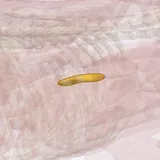
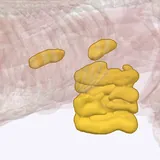
Anatomy involved
Hooves
Laminitis is the main clinical consequence. The epidermal lamellae of the hoof wall interdigitate with the dermal lamellae covering the third phalanx and keep it suspended inside the hoof. When the lamellar epithelium stretches and weakens, the distal phalanx can rotate or sink inside the hoof.
In endocrinopathic laminitis lesions develop more slowly and insidiously than in laminitis from sepsis or grain overload. Divergent growth rings, wider apart at the heels than at the toe, are often seen.
Pancreas
The β cells of the islets secrete insulin. In equine ID secretion is excessive and diabetes is rare: blood glucose is almost always normal.
Small intestine
Here starch is digested, sugars are absorbed and the incretins that amplify insulin secretion are released. This is why oral sugar tests reproduce the insulin response to feed, including the incretin effect, which intravenous tests leave out.
Clinical signs
- general or regional obesity, especially a thick, firm cresty neck
- acute or chronic laminitis, sometimes mild and recurrent, with stiffness, weight on the heels, reluctance to turn, increased digital pulse and divergent rings in the hoof wall
Many horses show no signs until their first episode of laminitis.
Diagnosis
- History and examination assess body condition, the neck crest and previous or current laminitis.
- Basal insulin is measured non-fasted, with the horse eating hay. A high value confirms ID, but a normal value does not rule it out.
- Dynamic tests with oral sugars are the most recommended. In the oral sugar test, with corn syrup, insulin is measured 60–90 minutes later. In the in-feed glucose test, about 2 hours after the glucose meal.
In older horses PPID should be ruled out by measuring ACTH, because both can coexist.
Treatment and prevention
Diet
It is the foundation of treatment.
- Cereals and sugary feeds are removed.
- Low-sugar hay is fed, analysed or, if not, soaked to reduce sugars, and weighed.
- If the horse needs to lose weight, hay is restricted to 1.25–1.5% of body weight as dry matter per day, according to the consensus, with a vitamin and mineral supplement.
- Access to pasture is limited or removed, or a grazing muzzle is used.
Extreme restriction must be avoided, especially in ponies and donkeys, because of the risk of hyperlipaemia.
Exercise
Regular exercise if the horse has no active laminitis. As well as helping weight loss, it improves insulin sensitivity.
Drugs
They are an aid when diet and exercise are not enough:
- levothyroxine, to speed weight loss
- metformin, with poor oral absorption in the horse and doubtful efficacy
- SGLT2 inhibitors (velagliflozin, canagliflozin, ertugliflozin), which lower insulin by increasing urinary glucose loss; their use in horses is still off-label in most countries and they can raise triglycerides
Laminitis
Analgesia, frog and sole support, rest on deep soft bedding and insulin control.
Regulations
The horse is a food-producing species in many countries. In the EU its passport states whether it is excluded from the food chain, and this determines which medicines may be used and with which withdrawal periods.
Key studies
- ECEIM consensus (Durham et al., 2019). Defines EMS as a cluster of risk factors for endocrinopathic laminitis, with insulin dysregulation as the most important. Diagnosis combines history, examination and laboratory tests, and control relies on diet and exercise, with drugs as an aid in some cases. It is expert opinion; several authors declared links with drug manufacturers and diagnostic laboratories.
- Menzies-Gow et al. (2017). Prospective cohort of 446 non-laminitic ponies aged 7 years or more, followed for 3 years. 72.2% were overweight or obese. Laminitis developed in 4.0% at one year, 6.7% at 2 years and 9.9% at 3 years. Low adiponectin and high basal or post-dexamethasone insulin predicted laminitis. Measurements were taken once, at the start, and laminitis episodes were reported by owners.
- Knowles et al. (2023). Prospective cohort of 374 non-laminitic ponies followed for up to 4 years (891 pony-years). Incidence was 4.8 cases per 100 pony-years. By basal insulin, the 4-year risk was 6% in the low category (below 21.6 µIU/mL), 22% in the medium and 69% in the high (above 45.2 µIU/mL). By insulin 60 minutes after the oral sugar test, it was 3%, 20% and 73%. ACTH was not independently associated with laminitis. Cut-offs depend on the insulin assay used and on the population.
- Meier et al. (2018). Study in 49 ponies with ID randomly assigned to velagliflozin (12) or control (37) and fed an experimental diet very rich in non-structural carbohydrates. Velagliflozin lowered peak insulin by 45%, and none of the treated ponies developed laminitis, versus 14 of 37 controls (38%). The treated group was small, laminitis was induced with an extreme diet and the study was funded by the manufacturer.
- Bamford et al. (2019). Study in 24 obese horses and ponies over 12 weeks, comparing dietary restriction alone with restriction plus low-intensity exercise on a walker. Weight loss was similar in both groups, but only exercise improved insulin sensitivity and reduced an inflammatory marker, serum amyloid A. It is a small, short study.
Structures affected

References
- Reed SM, Bayly WM, Sellon DC. Equine Internal Medicine, 4th ed. Elsevier (2018)
- Durham AE, Frank N, McGowan CM, et al. ECEIM consensus statement on equine metabolic syndrome. J Vet Intern Med 33:335-349 (2019)
- Menzies-Gow NJ, Harris PA, Elliott J. Prospective cohort study evaluating risk factors for the development of pasture-associated laminitis in the United Kingdom. Equine Vet J 49:300-306 (2017)
- Knowles EJ, Elliott J, Harris PA, et al. Predictors of laminitis development in a cohort of nonlaminitic ponies. Equine Vet J 55:12-23 (2023)
- Meier A, Reiche D, de Laat M, et al. The sodium-glucose co-transporter 2 inhibitor velagliflozin reduces hyperinsulinemia and prevents laminitis in insulin-dysregulated ponies. PLoS One 13:e0203655 (2018)
- Bamford NJ, Potter SJ, Baskerville CL, et al. Influence of dietary restriction and low-intensity exercise on weight loss and insulin sensitivity in obese equids. J Vet Intern Med 33:280-286 (2019)
- Karikoski NP, Horn I, McGowan TW, et al. The prevalence of endocrinopathic laminitis among horses presented for laminitis at a first-opinion/referral equine hospital. Domest Anim Endocrinol 41:111-7 (2011)
- Merck Veterinary Manual: Equine Metabolic Syndrome
- Merck Veterinary Manual: Laminitis in Horses
- Schnepf A, Bienert-Zeit A, Ertugrul H, et al. Antimicrobial Usage in Horses: The Use of Electronic Data, Data Curation, and First Results. Front Vet Sci 7:216 (2020)
See it in 3D on your iPhone
Peel the layers, spin the model, quiz yourself on it and stand it on your desk in AR. AnatomyCompass is coming to iPhone, iPad and Mac: get one email when it’s out.
Text adapted from Vet Atlas (CC BY-SA 4.0). Sources and licences. This veterinary text has not yet been reviewed by a veterinarian.