 AnatomyCompass
Equine sarcoid
Neoplastic · Horse
Fibroblastic skin tumour associated with bovine papillomavirus. It is the most common skin tumour of equids; it does not metastasise, but it invades locally and recurs easily after incomplete treatment.
Key points
- It is associated with bovine papillomavirus types 1 and 2, whose DNA is in almost all sarcoids.
- An incomplete treatment, including partial biopsy, can activate the lesion.
- Several clinical types, from occult to fibroblastic, can coexist in the same horse.
- Periocular sarcoids are the hardest to treat.
- There is no proven treatment of choice; it is chosen by type, size and location.
What it is
The sarcoid is a locally aggressive fibroblastic tumour of the skin.
It is associated with infection by bovine papillomavirus types 1 and 2 (BPV-1 and BPV-2), whose DNA is found in almost all sarcoids. Viral DNA is also found in normal skin of affected horses, suggesting a latent phase.
How it is transmitted is unclear. Flies and contact with wounds are suspected, and sarcoids often appear at sites of damaged skin.
It does not metastasise, but it can grow large, ulcerate, become infected and multiply. Incomplete treatment, including handling or partial biopsy, can activate the lesion and make it grow faster.
Clinical types
They can coexist in the same horse.
- Occult, an alopecic area of slightly thickened, scaly skin.
- Verrucous, a dry, rough, wart-like lesion.
- Nodular, with firm subcutaneous nodules and normal or thinned skin over them.
- Fibroblastic, a fleshy, ulcerated mass that bleeds easily.
- Mixed, a combination of the above.
- Malevolent, very rare, which spreads extensively through the skin, forming cords of tumour tissue with nodules.
Who it affects
Horses, donkeys and mules of any breed, most often young adults.
There is a genetic predisposition: some families and breeds are more affected. Horses with one sarcoid tend to develop others.
Anatomy involved
Skin
Lesions can develop anywhere. Typical sites are:
- the head, especially the periocular region
- the paragenital region, such as the inguinal region and prepuce
- the ventral thorax and abdomen
Wounds and scars are frequent sites.
Eyelids
Periocular sarcoids are the hardest to treat. They affect the eyelids and periocular skin, and their growth compromises eyelid closure and protection of the cornea. Surgery with wide margins can deform the eyelids and leave the eye unprotected.
Clinical signs
- one or more skin lesions of the types described, growing slowly or, after trauma or incomplete treatment, rapidly
- ulceration, bleeding and secondary infection in fibroblastic forms, which attract flies
- depending on location, problems with the saddle, girth or bridle, or with eyelid closure
Diagnosis
Diagnosis is mainly clinical, from the appearance, location and history.
Biopsy confirms the diagnosis, but partial biopsy can activate the tumour. It is preferably done with complete excision of the lesion or when the result will change treatment.
PCR for BPV DNA in lesion samples supports the diagnosis.
The differential diagnosis includes exuberant granulation tissue, papillomas and other skin tumours such as squamous cell carcinoma.
Treatment and prevention
There is no clearly proven treatment of choice. The choice depends on the type, size, number and location of the lesions:
- surgical excision with wide margins, often with electrosurgery or laser
- cryosurgery
- intralesional chemotherapy with cisplatin or carboplatin, or electrochemotherapy
- immunotherapy with intralesional BCG vaccine
- topical cytotoxic or immunomodulatory treatments, such as imiquimod
- radiotherapy (brachytherapy), with good results in delicate areas such as the periocular region, but with limited access
Prevention relies on fly control and protection of wounds.
Regulations
The horse is a food-producing species in many countries. In the EU its passport states whether it is excluded from the food chain, and this determines which medicines may be used and with which withdrawal periods. Many of the products listed are not authorised for equids.
Key studies
- Offer et al. (2024). Systematic review of sarcoid treatments. Only 10 studies met the criteria: histological confirmation of lesions and at least 6 months of follow-up. Reported regression ranged from 28% to 100% per sarcoid and from 9% to 100% per horse, with risk of bias from "some concerns" to "critical". The authors conclude that there is insufficient evidence to recommend one treatment over another and call for randomised placebo-controlled trials.
- Haspeslagh et al. (2016). Retrospective series of 230 equids with 614 sarcoids treated under a standardised protocol. Overall success, defined as complete regression without recurrence for at least 6 months, was 74.9%, and highest with electrosurgical excision (86.8%). Intralesional platinum chemotherapy, cryosurgery and topical acyclovir had more failures, as did horses with several sarcoids. Treatment was not randomised but chosen by lesion type.
- Christen-Clottu et al. (2010). Randomised blinded trial in 53 horses (444 sarcoids) treated with subcutaneous mistletoe extract (Viscum album) (32) or placebo (21) for 105 days. Complete or partial regression occurred in 41% of treated horses versus 14% of controls. Complete disappearance of lesions (38% versus 13%) was not significant. Diagnosis was clinical, without histological confirmation of all lesions.
- Beermann et al. (2024). Randomised, double-blind, placebo-controlled trial in 45 horses, with oral mistletoe extract, subcutaneous extract or placebo for 7 months. There were no significant differences in the primary endpoint. Complete regression was 27%, 21% and 13%, and the comparison of the oral route with placebo gave an OR of 2.16 (95% CI 0.45–10.42). It did not confirm the benefit of the 2010 study, and it is too small to detect moderate differences.
- Haspeslagh et al. (2017). Double-blind trial with 49 occult and verrucous sarcoids treated twice daily for 6 months with 5% acyclovir cream (24) or placebo (25). There were no differences in success rate, diameter, surface area or appearance of the lesions. The number of lesions was small and only mild sarcoid types were included.
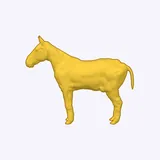
Structures affected

References
- Knottenbelt DC, Patterson-Kane JC, Snalune KL. Clinical Equine Oncology. Elsevier (2015)
- Offer KS, Dixon CE, Sutton DGM. Treatment of equine sarcoids: A systematic review. Equine Vet J 56:12-25 (2024)
- Christen-Clottu O, Klocke P, Burger D, et al. Treatment of clinically diagnosed equine sarcoid with a mistletoe extract (Viscum album austriacus). J Vet Intern Med 24:1483-9 (2010)
- Beermann A, Clottu O, Reif M, et al. A randomized placebo-controlled double-blinded study comparing oral and subcutaneous administration of mistletoe extract for the treatment of equine sarcoid disease. J Vet Intern Med 38:1815-1824 (2024)
- Haspeslagh M, Jordana Garcia M, Vlaminck LEM, et al. Topical use of 5% acyclovir cream for the treatment of occult and verrucous equine sarcoids: a double-blinded placebo-controlled study. BMC Vet Res 13:296 (2017)
- Haspeslagh M, Vlaminck LE, Martens AM. Treatment of sarcoids in equids: 230 cases (2008-2013). J Am Vet Med Assoc 249:311-8 (2016)
- Carr EA, Théon AP, Madewell BR, et al. Bovine papillomavirus DNA in neoplastic and nonneoplastic tissues obtained from horses with and without sarcoids in the western United States. Am J Vet Res 62:741-4 (2001)
- Merck Veterinary Manual: Equine Sarcoids
- Merck Veterinary Manual: Ocular Neoplasia in Horses
- Merck Veterinary Manual: Tumors of the Skin in Horses
- Regulation (EU) 2019/6 on veterinary medicinal products, Article 112 (equine species declared not intended for slaughter)
See it in 3D on your iPhone
Peel the layers, spin the model, quiz yourself on it and stand it on your desk in AR. AnatomyCompass is coming to iPhone, iPad and Mac: get one email when it’s out.
Text adapted from Vet Atlas (CC BY-SA 4.0). Sources and licences. This veterinary text has not yet been reviewed by a veterinarian.