 AnatomyCompass
Hypothyroidism
Metabolic · Dog
A common endocrine disease of the dog. Destruction of the thyroid gland reduces thyroid hormone production and slows metabolism.
Key points
- In the dog it is almost always primary, from lymphocytic thyroiditis or idiopathic follicular atrophy.
- It causes non-pruritic symmetrical alopecia of the trunk, flanks and tail.
- Mild non-regenerative anaemia and hypercholesterolaemia are typical on blood work.
- A low total T4 is not enough, because of euthyroid sick syndrome and many drugs.
- It is treated with lifelong oral levothyroxine.
What it is
In the dog, hypothyroidism is almost always primary, caused by loss of thyroid tissue. It has two main forms:
- lymphocytic thyroiditis, an immune-mediated destruction of the gland with antibodies against thyroglobulin
- idiopathic follicular atrophy, in which the thyroid tissue is lost and replaced by fat
Secondary (pituitary) and congenital hypothyroidism are rare.
Lack of thyroxine (T4) and triiodothyronine (T3) slows the metabolism of almost every tissue.
Who it affects
Middle-aged dogs of medium to large breeds.
Breeds with a reported higher risk include the golden retriever, Dobermann, Irish setter, miniature schnauzer, dachshund, cocker spaniel and Airedale terrier.
Anatomy involved
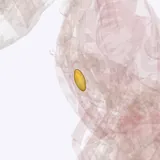
Thyroid gland (glandula thyroidea)
Two lobes on the lateral surfaces of the trachea, just caudal to the larynx. In the dog the connecting isthmus is indistinct.
In hypothyroidism the lobes lose volume, which an experienced operator can see on ultrasound.
Skin
Thyroid hormone deficiency delays hair regrowth and causes alopecia. In severe cases the skin thickens (myxoedema).
Clinical signs
Signs are diffuse, variable and often nonspecific.
Metabolic
- lethargy and mental dullness
- exercise intolerance
- weight gain without increased appetite
- heat-seeking, from cold intolerance
Dermatological
- bilaterally symmetrical, non-pruritic alopecia of the trunk, flanks and tail ("rat tail")
- failure of hair to regrow after clipping
- dry, dull coat
- hyperpigmentation and secondary pyoderma
- thickened facial skin from myxoedema, with a "tragic" expression
Others
- reproductive disorders in intact dogs
- uncommon neurological disorders: megaoesophagus, laryngeal or facial nerve paralysis, vestibular disease
- in rare cases, myxoedema coma with bradycardia and hypothermia
Diagnosis
- Routine blood work typically shows mild non-regenerative anaemia and hypercholesterolaemia.
- A normal total T4 makes hypothyroidism unlikely. A low value is not enough on its own, because illness and many drugs (glucocorticoids, phenobarbital, sulfonamides) lower it: this is euthyroid sick syndrome. Sighthounds normally have low T4.
- Free T4 by equilibrium dialysis and endogenous TSH are measured. A low free T4 with a high TSH supports the diagnosis.
- Thyroglobulin autoantibodies indicate lymphocytic thyroiditis.
- Improvement of signs during supplementation confirms the diagnosis.
Treatment
Lifelong oral levothyroxine (synthetic T4).
Activity and mental state improve within days to weeks. The coat and body weight take months.
The dose is adjusted by measuring total T4 a few hours after the dose. Over-supplementation can cause thyrotoxicosis, with polyuria, panting, weight loss and tachycardia.
With treatment the prognosis is good, and treatment failure is uncommon.
Structures affected
References
- Feldman EC, Nelson RW, Reusch CE, Scott-Moncrieff JCR. Canine and Feline Endocrinology, 4th ed. Elsevier (2015)
- Ettinger SJ, Feldman EC, Côté E. Textbook of Veterinary Internal Medicine, 8th ed. Elsevier (2017)
- Merck Veterinary Manual: Hypothyroidism in Animals
- Merck Veterinary Manual: Overview of the Thyroid Gland in Animals
See it in 3D on your iPhone
Peel the layers, spin the model, quiz yourself on it and stand it on your desk in AR. AnatomyCompass is coming to iPhone, iPad and Mac: get one email when it’s out.
Text adapted from Vet Atlas (CC BY-SA 4.0). Sources and licences. This veterinary text has not yet been reviewed by a veterinarian.