 AnatomyCompass
Ketosis
Metabolic · Cow
Raised blood ketone bodies caused by negative energy balance in early lactation, often accompanied by fatty liver. The subclinical form is very common in the first weeks after calving.
Key points
- The most widely used threshold for subclinical ketosis is blood BHB of 1.2 mmol/L.
- It is most frequent in the first and second week after calving.
- Overconditioning at dry-off and calving increases the risk.
- Blood β-hydroxybutyrate is the most accurate test, and can be measured cow-side.
- Oral propylene glycol is the usual treatment for subclinical ketosis.
What it is
After calving, the dairy cow needs far more energy and glucose to produce milk than she can eat. She enters negative energy balance.
In ruminants, much of the glucose is made by the liver through gluconeogenesis, from precursors such as propionate produced in the rumen.
When glucose is short, the cow mobilises body fat and releases non-esterified fatty acids (NEFA), which reach the liver and are oxidised for energy. If the supply exceeds the hepatocyte's capacity:
- oxidation is incomplete and ketone bodies are formed: β-hydroxybutyrate, acetoacetate and acetone
- the remaining fatty acids are re-esterified and stored as triglycerides, which is fatty liver (hepatic lipidosis)
Forms
- Subclinical ketosis (hyperketonaemia): raised blood β-hydroxybutyrate (BHB) without clinical signs. The most widely used threshold is 1.2 mmol/L.
- Clinical ketosis: higher concentrations with loss of appetite and production, or nervous signs.
Two pictures are usually described. One is caused by insufficient energy supply, in high-producing cows somewhat after the peak of demand. The other occurs in the first two weeks after calving, linked to fatty liver and excessive fat mobilisation in overconditioned cows.
Silages rich in butyric acid also supply ketone bodies.
Who it affects
High-producing dairy cows in the first weeks of lactation, most often in the first and second week after calving.
Risk is increased by:
- overconditioning at dry-off and calving
- low intake during the transition period
- postpartum diseases that reduce appetite: hypocalcaemia, metritis, mastitis, lameness
- the number of lactations
It is a herd problem. A high or rising prevalence of subclinical cases points to nutritional and management problems.
Anatomy involved
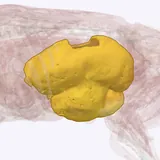
Liver
The central organ of the disease. It makes glucose from precursors such as propionate and produces ketone bodies.
In fatty liver its gluconeogenic capacity falls, which worsens the negative energy balance.
Rumen
Its fermentation determines the energy supply. Propionate is a glucose precursor, and monensin acts partly by increasing its production. Silages rich in butyric acid supply ketone bodies.
Lower feed intake reduces the energy supply. In clinical ketosis rumen motility is variable: increased in some cows and reduced in others.
Clinical signs
Subclinical ketosis has no signs, but it reduces milk yield and increases the risk of other diseases.
Digestive or wasting form
- loss of appetite, usually first for concentrate and then for forage
- a sharp drop in milk yield
- loss of weight and body condition
- firm, dry faeces
- lethargy
- usually no fever
Nervous form
It is less common.
- abnormal licking and chewing
- pica
- incoordination and abnormal gait
- bellowing or aggression
Diagnosis
- Blood β-hydroxybutyrate is the most accurate method. Hand-held electronic meters allow it to be measured cow-side with good accuracy.
- Ketone bodies in milk or urine, with reagent strips or powders, are useful for screening but less accurate than blood measurement.
- Herd monitoring tests several cows in the first two weeks of lactation to estimate the prevalence of subclinical ketosis. Prepartum NEFA indicate the degree of fat mobilisation.
- Definitive diagnosis of fatty liver requires a liver biopsy with measurement of fat content. Ultrasound is still being developed for this purpose.
- Concurrent diseases (displaced abomasum, metritis, mastitis), which often trigger or sustain ketosis, must be looked for.
Treatment and prevention
Treatment
- Oral propylene glycol, a glucose precursor. It is the usual treatment for subclinical ketosis and part of the treatment of clinical ketosis.
- Intravenous glucose, with a rapid but short-lived effect and frequent relapses. It is recommended mainly in nervous ketosis.
- Correction of concurrent diseases and encouragement of feed intake.
Prevention
- Avoid overconditioning cows at dry-off.
- Maintain high intake during the transition period, with enough feed bunk space, no overcrowding or sudden diet changes, and stress control.
- Prevent hypocalcaemia and other postpartum diseases.
- Detect subclinical ketosis with systematic BHB testing of fresh cows.
- Monensin reduces ketosis, but its use in dairy cows is not authorised in every country.
Drug use in food-producing animals is subject to each country's regulations and to withdrawal periods for milk and meat.
Key studies
- Duffield et al. (2009). Cohort of 1010 Holstein cows from 25 farms in Ontario. Serum BHB of 1200 µmol/L or more in the first week after calving was associated with more displaced abomasum (OR 2.60) and metritis (OR 3.35); in the second week, the threshold for displaced abomasum was 1800 µmol/L (OR 6.22). BHB of 1400 µmol/L predicted clinical ketosis (OR 4.25 and 5.98 in the first and second week). There was no association with clinical mastitis. Hyperketonaemia reduced milk at the first test by up to 1.88 kg/d (first week) and 3.3 kg/d (second week). The farms were mostly tie-stall operations.
- McArt et al. (2012), cohort. 1717 cows from 4 herds in New York and Wisconsin, tested 6 times between days 3 and 16 of lactation. 43.2% had at least one BHB of 1.2 to 2.9 mmol/L; incidence and prevalence peaked on day 5 (22.3% and 28.9%). Cows first testing positive on days 3 to 5 had 6.1 times the risk of displaced abomasum, and those first positive on days 3 to 7 had 4.5 times the risk of leaving the herd, a lower probability of conceiving at first insemination and 2.2 kg/d less milk over the first 30 days.
- McArt et al. (2012), trial. Randomised trial in the 741 cows with subclinical ketosis from the same cohort: 372 received oral propylene glycol until BHB normalised and 369 received no treatment. Untreated cows had 1.6 times the risk of displaced abomasum and 2.1 times the risk of dying or being sold in the first 30 days. Propylene glycol improved conception at first insemination in 3 of the 4 herds, without changing days to pregnancy.
- Iwersen et al. (2009). Evaluation of an electronic whole-blood BHB meter against laboratory analysis. In 196 samples the correlation was 0.95, with 100% sensitivity and specificity at 1400 µmol/L. In a field study with 926 samples from 35 practices, sensitivity was 88% and 96% and specificity 96% and 97% at 1200 and 1400 µmol/L. Milk and urine tests had clearly lower predictive values.
- Duffield et al. (2008). Meta-analysis of 16 papers with about 9500 cows. Monensin reduced the risk of ketosis (RR 0.75), displaced abomasum (RR 0.75) and mastitis (RR 0.91), with no effect on milk fever, lameness, dystocia, retained placenta, metritis or fertility. Prolonged prepartum treatment might increase the risk of dystocia and retained placenta.
Structures affected

References
- Duffield TF, Lissemore KD, McBride BW, et al. Impact of hyperketonemia in early lactation dairy cows on health and production. J Dairy Sci 92:571-80 (2009)
- McArt JAA, Nydam DV, Oetzel GR. Epidemiology of subclinical ketosis in early lactation dairy cattle. J Dairy Sci 95:5056-5066 (2012)
- McArt JA, Nydam DV, Oetzel GR. A field trial on the effect of propylene glycol on displaced abomasum, removal from herd, and reproduction in fresh cows diagnosed with subclinical ketosis. J Dairy Sci 95:2505-12 (2012)
- Iwersen M, Falkenberg U, Voigtsberger R, et al. Evaluation of an electronic cowside test to detect subclinical ketosis in dairy cows. J Dairy Sci 92:2618-24 (2009)
- Duffield TF, Rabiee AR, Lean IJ. A meta-analysis of the impact of monensin in lactating dairy cattle. Part 3. Health and reproduction. J Dairy Sci 91:2328-41 (2008)
- Constable PD, Hinchcliff KW, Done SH, Grünberg W. Veterinary Medicine: A Textbook of the Diseases of Cattle, Horses, Sheep, Pigs, and Goats, 11th ed. Elsevier (2017)
- Merck Veterinary Manual: Hyperketonemia in Cattle
- Merck Veterinary Manual: Fatty Liver Disease of Cattle
- Merck Veterinary Manual: Pregnancy Toxemia in Cows
See it in 3D on your iPhone
Peel the layers, spin the model, quiz yourself on it and stand it on your desk in AR. AnatomyCompass is coming to iPhone, iPad and Mac: get one email when it’s out.
Text adapted from Vet Atlas (CC BY-SA 4.0). Sources and licences. This veterinary text has not yet been reviewed by a veterinarian.