 AnatomyCompass
Polycystic kidney disease
Congenital · Cat
Autosomal dominant inherited disease in which multiple cysts form in both kidneys, enlarge with age and destroy the parenchyma. It mainly affects Persians and related breeds and ends in chronic kidney disease.
Key points
- It is caused by a variant of the PKD1 gene; the homozygous form is considered lethal.
- Ultrasound reliably detects the cysts even in kittens.
- A genetic test identifies carriers at any age, before they are bred.
- Kidney failure usually appears in middle-aged adult cats, with widely variable progression.
- There is no treatment for the cysts; the most effective measure is not breeding affected cats.
What it is
Polycystic kidney disease (PKD) is an inherited disorder caused by a variant of the PKD1 gene, which encodes polycystin 1.
It is inherited as an autosomal dominant trait: one copy of the variant is enough for the cat to be affected. The homozygous form is considered lethal before birth.
Fluid-filled cysts in both kidneys can already be detected in young kittens. Over the years they crowd out the functional renal tissue and lead to chronic kidney disease. The rate of progression varies widely between cats.
Who it affects
Persians and breeds derived from or crossed with them, such as the Exotic Shorthair. The variant has also been found in other breeds, such as the Scottish Fold.
Prevalence in Persians was high before genetic testing and has fallen in breeding populations where testing has been used.
The cysts are present from an early age, but kidney failure usually appears in middle-aged adult cats. Some develop it earlier and others never do.
Anatomy involved
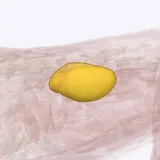
There are multiple cysts in both kidneys, which progressively crowd out the normal parenchyma.
Cysts can also form in the liver of some affected cats.
Clinical signs
For years there are no signs. As renal function is lost, the signs of chronic kidney disease appear:
- polyuria and polydipsia
- weight and appetite loss
- vomiting and lethargy
- dehydration
- a poor coat
Systemic hypertension and concurrent pyelonephritis can occur.
Diagnosis
- Renal ultrasound shows anechoic cysts in the kidneys. It is a reliable screening method even in kittens, and age-based criteria for the number of cysts have been proposed.
- A genetic test for the PKD1 variant, on a DNA sample, detects carrier cats at any age, before they are used for breeding.
- Creatinine, SDMA, urine specific gravity, the urine protein:creatinine ratio and blood pressure are used to stage the kidney disease with the IRIS system.
Treatment
There is no specific treatment for the cysts. Chronic kidney disease is managed according to the IRIS stage:
- renal diet
- hydration
- control of hypertension and proteinuria
- phosphate binders
- antiemetics and appetite stimulants
The most effective measure is prevention: genetic or ultrasound testing of breeding cats, and not breeding from affected cats.
The prognosis depends on how quickly the cysts progress and on the stage of kidney disease.
Key studies
- Lyons et al. (2004). Identified the causal variant, a stop mutation in exon 29 of PKD1. It was present in heterozygous form in all 48 affected cats examined (41 Persians, a Siamese and breeds crossed with Persians) and in no unaffected cat. No homozygous cat was found, which supports the view that the homozygous form is lethal before birth.
- Barthez et al. (2003). Ultrasound screening of 310 healthy cats in France. Prevalence was 41.8% in Persians and 39.1% in Exotic Shorthairs, with no difference between males and females.
- Bonazzi et al. (2009). 70 Persian and Exotic Shorthair kittens examined by ultrasound and genetic test at 10–14 weeks. Ultrasound had 96.2% sensitivity and 91% specificity, and agreement with the genetic test was high (kappa 0.85). Some cats with cysts were negative on the genetic test, so the authors recommend using both.
- Guerra et al. (2019). 82 genotyped Persian cats examined by ultrasound, from which age-based criteria were derived. One cyst is enough for the diagnosis up to 15 months of age; two are needed from 16 to 32 months, three from 33 to 49 months and four from 50 to 66 months.
- Enomoto et al. (2025). Retrospective cohort of 300 cats carrying the PKD1 variant in Japan. Life expectancy at birth was about 12.7 years, with survival of 95.1% at 5 years and 61.3% at 10 years, and 16% progressed to uraemia. Survival began to fall clearly at 6 to 7 years of age.
- Ukawa et al. (2026). Data from 110,325 insured cats and 61,968 genotyped cats in Japan. 77.8% of cats with cystic kidneys carried the classic variant, so other variants also cause the disease. Between 2019, when routine testing of kittens began, and 2022, the frequency of carriers fell by 42.6% across 14 breeds, with no substantial change in inbreeding in the Scottish Folds and Persians analysed.
Structures affected
References
- Lyons LA, Biller DS, Erdman CA, et al. Feline polycystic kidney disease mutation identified in PKD1. J Am Soc Nephrol 15:2548-2555 (2004)
- Barthez PY, Rivier P, Begon D. Prevalence of polycystic kidney disease in Persian and Persian related cats in France. J Feline Med Surg 5:345-347 (2003)
- International Renal Interest Society (IRIS). IRIS Staging of CKD (2023)
- Bonazzi M, Volta A, Gnudi G, et al. Comparison between ultrasound and genetic testing for the early diagnosis of polycystic kidney disease in Persian and Exotic Shorthair cats. J Feline Med Surg 11:430-434 (2009)
- Guerra JM, Freitas MF, Daniel AG, et al. Age-based ultrasonographic criteria for diagnosis of autosomal dominant polycystic kidney disease in Persian cats. J Feline Med Surg 21:156-164 (2019)
- Enomoto T, Kobayashi S, Ishiguro N. Life table analysis of feline polycystic kidney disease in Japan. J Vet Med Sci 87:791-797 (2025)
- Ukawa H, Kida A, Ataka K, et al. Widespread genetic testing controls inherited polycystic kidney disease while avoiding inbreeding in cats. BMC Genomics 27:716 (2026)
- Merck Veterinary Manual: Renal Anomalies in Animals
- Merck Veterinary Manual: Renal Dysfunction in Dogs and Cats
See it in 3D on your iPhone
Peel the layers, spin the model, quiz yourself on it and stand it on your desk in AR. AnatomyCompass is coming to iPhone, iPad and Mac: get one email when it’s out.
Text adapted from Vet Atlas (CC BY-SA 4.0). Sources and licences. This veterinary text has not yet been reviewed by a veterinarian.