 AnatomyCompass
Benign prostatic hyperplasia
Degenerative · Dog
Androgen-dependent, age-related enlargement of the prostate in intact male dogs. It is the most common prostatic disorder.
Key points
- It is driven by dihydrotestosterone, produced from testosterone by 5α-reductase.
- It is found in almost all intact dogs over 6 years old, though many have no signs.
- On rectal palpation the prostate is symmetrically enlarged, smooth and non-painful.
- In a dog with prostatic disease, urethral obstruction suggests neoplasia rather than BPH.
- Castration is the treatment of choice in dogs not intended for breeding.
What it is
Benign prostatic hyperplasia (BPH) is a spontaneous hyperplasia and hypertrophy of the prostatic epithelial cells.
It is driven by dihydrotestosterone, produced from testosterone by 5α-reductase within the gland.
It begins as glandular hyperplasia and progresses to a cystic form, with small intraparenchymal cysts.
The enlargement is symmetrical and the gland stays non-painful.
BPH may also predispose to prostatitis.
Who it affects
Intact male dogs.
Glandular hyperplasia can begin as early as 2.5 years of age, and cystic hyperplasia tends to develop after 4 years.
It is found in almost all intact dogs over 6 years old, but many have no signs.
Anatomy involved
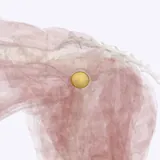
The prostate (prostata) lies within the pelvis, caudal to the bladder, and the proximal urethra runs through it. As it enlarges it moves cranially and can be found in the caudal abdomen.
The rectum lies dorsal to the prostate, which is why the gland is palpated per rectum. An enlarged gland can cause constipation and straining to defecate.
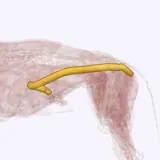
The prostatic urethra runs through the gland. In a dog with prostatic disease, urethral obstruction strongly suggests neoplasia rather than BPH.
Clinical signs
Often none, or only haemospermia and/or infertility.
When present:
- persistent or intermittent haematuria
- haemospermia
- haemorrhagic preputial discharge
- tenesmus or constipation
Systemic signs, such as fever, malaise or abdominal pain, suggest bacterial prostatitis, abscess or neoplasia rather than uncomplicated BPH.
Diagnosis
- On rectal palpation the prostate is symmetrically enlarged, smooth and non-painful.
- Ultrasound is the best method to assess size and echotexture. It shows diffuse, relatively symmetrical enlargement, sometimes with increased echogenicity and thin-walled intraparenchymal cysts. It allows guided fine-needle aspiration.
- Radiographs confirm prostatomegaly, since the normal prostate is not usually visible. Areas of mineralisation suggest chronic prostatitis or neoplasia instead.
- Cytology and culture of the ejaculate or of a prostatic wash look for concurrent infection.
- Canine prostate-specific arginine esterase (CPSE) rises in BPH, but also in prostatitis and neoplasia, so it does not tell them apart.
Definitive diagnosis requires cytology of an aspirate or histology of a biopsy.
Treatment
Castration is the treatment of choice in dogs not intended for breeding. Involution is usually evident within a few weeks and often complete in several months.
When the dog is to be kept for breeding, medical treatment reduces prostate size and signs. The options are:
- osaterone acetate, an antiandrogen
- finasteride, a 5α-reductase inhibitor
- a deslorelin implant
The effect lasts only as long as treatment does.
Structures affected
References
- Johnston SD, Root Kustritz MV, Olson PNS. Canine and Feline Theriogenology. Saunders (2001)
- Fossum TW. Small Animal Surgery, 5th ed. Elsevier (2018)
- Merck Veterinary Manual: Benign Prostatic Hyperplasia in Dogs
- Merck Veterinary Manual: Prostatic Diseases in Small Animals
- Merck Veterinary Manual: Neoplasms of the Prostate in Dogs
- Merck Veterinary Manual: Reproductive Disorders of Male Dogs
- Posastiuc FP, Constantin NT, Domain G, et al. A systematic review of medical treatments for benign prostatic hyperplasia in dogs: evaluating strategies for reproductive function preservation. Vet Sci 12:70 (2025)
See it in 3D on your iPhone
Peel the layers, spin the model, quiz yourself on it and stand it on your desk in AR. AnatomyCompass is coming to iPhone, iPad and Mac: get one email when it’s out.
Text adapted from Vet Atlas (CC BY-SA 4.0). Sources and licences. This veterinary text has not yet been reviewed by a veterinarian.