 AnatomyCompass
Prostate
Prostata · Dog · Splanchnology (organs) · Genital system
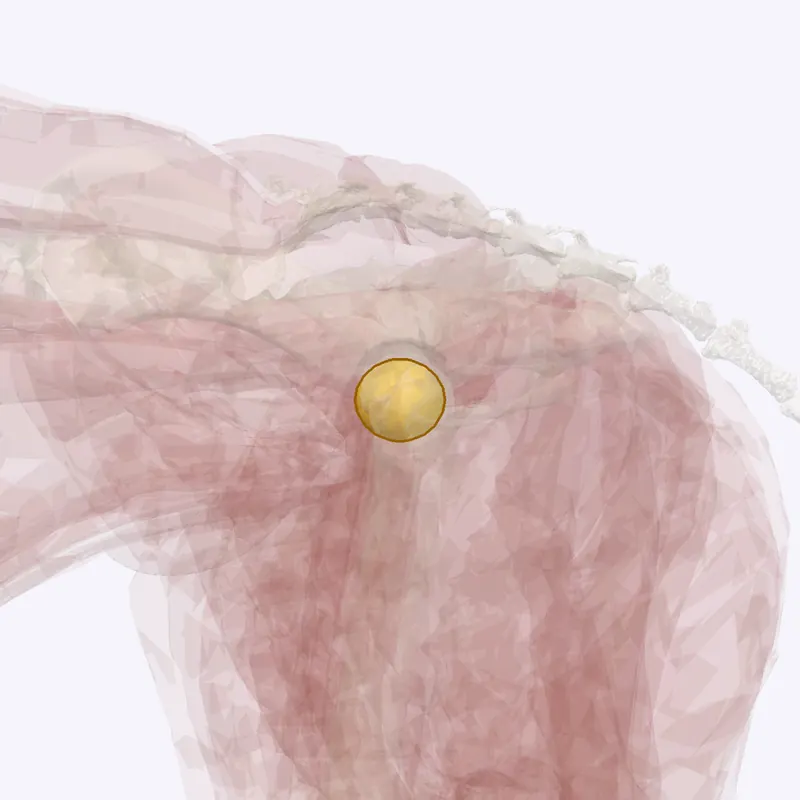
The only accessory sex gland of the dog. It surrounds the urethra next to the bladder neck, at the pelvic inlet.
Key points
- In young dogs it lies within the pelvic canal or at the pubic brim.
- With age and enlargement it moves cranially into the abdomen.
- It is palpated per rectum, since its dorsal surface lies against the rectum.
- Benign prostatic hyperplasia is almost universal in older intact males and responds to castration.
- Prostatic carcinoma also occurs in castrated males.
Topography
It is bilobed and completely surrounds the proximal pelvic urethra, just caudal to the bladder neck.
In young dogs it lies within the pelvic canal or at the pubic brim. With age and enlargement it moves cranially into the abdomen.
Dorsally it lies against the rectum, so it is palpated per rectum.
Clinical relevance
- Benign prostatic hyperplasia. Almost universal in older intact males. It causes tenesmus, haematuria or bloody discharge and responds to castration.
- Prostatitis and prostatic abscesses. They cause pain, fever and recurrent urinary infection.
- Prostatic carcinoma. Also occurs in castrated males. It often spreads to the sublumbar lymph nodes and lumbar vertebrae.
3D model
Schematic shape, of illustrative fidelity, placed from landmarks on the skeleton and the scanned organs. It shows topography, not fine morphology.
The model is a male, because the CT dog was male.
Diseases
- Benign prostatic hyperplasiaAndrogen-dependent, age-related enlargement of the prostate in intact male dogs. It is the most common…
Related structures
See it in 3D on your iPhone
Peel the layers, spin the model, quiz yourself on it and stand it on your desk in AR. AnatomyCompass is coming to iPhone, iPad and Mac: get one email when it’s out.
Text adapted from Vet Atlas (CC BY-SA 4.0). 3D model: Vet Atlas procedural organs (CC BY-SA 4.0). Sources and licences. This veterinary text has not yet been reviewed by a veterinarian.