 AnatomyCompass
Cystic ovarian disease
Metabolic · Cow
Follicles that fail to ovulate and persist on the ovary in the absence of a corpus luteum, as follicular or luteal cysts. It is common in dairy cows after calving, causes anoestrus or irregular heats and lengthens the interval to pregnancy.
Key points
- The preovulatory LH surge fails, so the dominant follicle does not ovulate.
- The classical definition is a structure over 25 mm persisting for at least 10 days.
- Anoestrus is the most common presentation; nymphomania is uncommon nowadays.
- Rectal palpation cannot reliably distinguish a follicular from a luteal cyst.
- A follicular cyst is treated with GnRH and, a few days later, prostaglandin F2α.
What it is
In cystic ovarian disease a dominant follicle grows but does not ovulate. The preovulatory surge of luteinising hormone (LH) fails, because the hypothalamus does not respond as it should to the follicle's oestradiol.
The follicle keeps growing and persists longer than normal, in the absence of a corpus luteum.
The classical definition is an anovulatory structure more than 25 mm in diameter persisting for at least 10 days. Many authors now use smaller diameters.
There are two types, which are extremes of the same process:
- the follicular cyst, with a thin wall, produces little progesterone and sometimes secretes oestrogens
- the luteal cyst, with a thicker, partly luteinised wall, produces progesterone
They should not be confused with a cystic corpus luteum: a normal corpus luteum with a central cavity, which forms after ovulation and is not pathological.
It is associated with the negative energy balance of early lactation, postpartum diseases and stress. Many cysts that appear in the first weeks after calving resolve on their own.
Who it affects
Mainly high-producing dairy cows in the first months of lactation. It becomes more frequent as the number of calvings increases.
It has a hereditary component and is associated with selection for milk yield.
A cow that has had cysts in one lactation is at greater risk in the next.
Anatomy involved
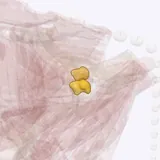
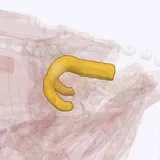
Ovaries
The cyst enlarges the ovary. Per rectum it is palpated as a fluid-filled structure, larger than a preovulatory follicle, with a thin (follicular) or thicker (luteal) wall.
There may be one or several cysts, on one or both ovaries. In the cow the ovaries lie just cranial to the pelvic inlet.
Uterus
Without ovulation there is no pregnancy. Palpation and ultrasound of the uterus are part of the examination, to rule out pregnancy and pyometra, other causes of anoestrus, before giving prostaglandin.
Pelvis
In chronic cases with follicular cysts there may be relaxation of the sacrotuberous ligaments, with a raised tail head.
Clinical signs
- anoestrus, the most common presentation
- irregular heats, with short or very long intervals
- nymphomania: frequent or continuous heat, with mounting of other cows; uncommon nowadays
- in chronic cases, a masculinised appearance and relaxation of the pelvic ligaments
Many cows are only detected at reproductive examinations, as cows not seen in heat or not becoming pregnant.
Diagnosis
- Rectal palpation detects an enlarged ovary with a cystic structure and the absence of a corpus luteum. It cannot reliably distinguish a follicular from a luteal cyst.
- Transrectal ultrasound measures size and wall thickness and looks for a corpus luteum. It is more accurate than palpation.
- Progesterone in blood or milk is low with a follicular cyst and raised with a luteal cyst.
- The examination is repeated to confirm that the structure persists and is not a normal growing follicle.
Treatment and prevention
Follicular cyst
GnRH (or hCG) is given to luteinise the cyst. A few days later, prostaglandin F2α removes the luteinised tissue and allows a new cycle.
Luteal cyst
Prostaglandin F2α.
Other options
Ovulation synchronisation protocols with fixed-time insemination, or intravaginal progesterone devices, are used when the cyst type cannot be determined or to reduce the days to insemination.
Manual rupture of the cyst is not recommended, because of the risk of haemorrhage and ovarian adhesions.
Prevention
- good transition management, to limit negative energy balance
- prevention and treatment of postpartum diseases
- regular reproductive examinations, to detect non-cycling cows early
Drug use in food-producing animals is subject to each country's regulations and to withdrawal periods for milk and meat.
Key studies
- Fourichon et al. (2000). Meta-analysis of 70 papers on the effect of disease on reproduction in the dairy cow. Ovarian cysts were associated with 6 to 11 more days to first service and 20 to 30 more days to conception. The included studies were observational.
- Nelson et al. (2010). Norwegian national registry with more than 500,000 lactations. Incidence was 0.82% per lactation. It increased with the number of calvings and with autumn calving (HR 2.6 compared with spring), and a cyst in the previous lactation increased the risk. Cows with cysts had more twin births (OR 2.2) and, among culled cows, more culling for reproductive problems (HR 2.1 from the third calving). Diagnoses were recorded in the field, without a common definition.
- Hooijer et al. (2001). 15,562 lactations of Dutch Black and White cows. Incidence was 7.7%, ranging from 1.9% to 11.3% between farms. Heritability was low (0.087 to 0.102), but the genetic correlation with milk, fat and protein yield was positive (0.345 to 0.441): selection for production may increase the frequency of cysts.
- Dinsmore et al. (1987). Randomised, double-blind trial in 265 cows with follicular cysts comparing two GnRH analogues. At 30 days the cyst could no longer be palpated in 85% and 89% of cows, with no differences in subsequent fertility. There was no untreated group and diagnosis was by palpation, so the effect of treatment cannot be separated from spontaneous resolution.
- López-Gatius and López-Béjar (2002). Randomised trial in 128 cows with ultrasound-diagnosed cysts. Starting treatment with GnRH and cloprostenol together, followed by cloprostenol and GnRH with fixed-time insemination, reduced cyst persistence (10.9% vs 46.9%) and increased ovulation (79.7% vs 17.2%) and pregnancy (28.1% vs 3.1%) compared with the Ovsynch protocol, with a pregnancy rate similar to that of cows without cysts (35.9%). It is a small trial from a single research group.
- Crane et al. (2006). 401 cows with cysts alternately allocated to Ovsynch or to a progesterone device with prostaglandin. 82% and 44% of cows, respectively, were inseminated, but conception (18.3% vs 23.1%) and pregnancy (14.4% vs 9.5%) did not differ. Cows in low body condition responded worse with both protocols. It was carried out in a single herd and allocation was not strictly random.
Structures affected
References
- Fourichon C, Seegers H, Malher X. Effect of disease on reproduction in the dairy cow: a meta-analysis. Theriogenology 53:1729-59 (2000)
- Nelson ST, Martin AD, Østerås O. Risk factors associated with cystic ovarian disease in Norwegian dairy cattle. Acta Vet Scand 52:60 (2010)
- Hooijer GA, Lubbers RB, Ducro BJ, et al. Genetic parameters for cystic ovarian disease in dutch black and white dairy cattle. J Dairy Sci 84:286-91 (2001)
- Dinsmore RP, White ME, Guard CL, et al. A randomized double blind clinical trial of two GnRH analogs for the treatment of cystic ovaries in dairy cows. Cornell Vet 77:235-43 (1987)
- López-Gatius F, López-Béjar M. Reproductive performance of dairy cows with ovarian cysts after different GnRH and cloprostenol treatments. Theriogenology 58:1337-48 (2002)
- Crane MB, Bartolome J, Melendez P, et al. Comparison of synchronization of ovulation with timed insemination and exogenous progesterone as therapeutic strategies for ovarian cysts in lactating dairy cows. Theriogenology 65:1563-74 (2006)
- Noakes DE, Parkinson TJ, England GCW. Veterinary Reproduction and Obstetrics, 10th ed. Elsevier (2019)
- Merck Veterinary Manual: Cystic Ovary Disease and Cystic Corpus Luteum in Cows
- Merck Veterinary Manual: Follicular Cystic Ovary Disease in Cows
- Merck Veterinary Manual: Luteal Cystic Ovary Disease in Cows
- Merck Veterinary Manual: Cystic Ovary Disease as a Herd Problem
- Merck Veterinary Manual: Pyometra in Production Animals
- WikiVet: Ovary - Anatomy & Physiology
- BorŞ SI, BorŞ A. Ovarian cysts, an anovulatory condition in dairy cattle. J Vet Med Sci 82:1515-1522 (2020)
See it in 3D on your iPhone
Peel the layers, spin the model, quiz yourself on it and stand it on your desk in AR. AnatomyCompass is coming to iPhone, iPad and Mac: get one email when it’s out.
Text adapted from Vet Atlas (CC BY-SA 4.0). Sources and licences. This veterinary text has not yet been reviewed by a veterinarian.