 AnatomyCompass
Ruminal tympany
Metabolic · Cow
Distension of the reticulorumen by fermentation gas that the animal cannot eructate. It can be frothy or free-gas, and it can kill quickly.
Key points
- Distension starts in the left flank, next to the dorsal sac of the rumen.
- Pasture frothy bloat is caused by legumes in the vegetative stage, such as alfalfa and clovers.
- If gas escapes easily through a stomach tube, the bloat is free-gas.
- In frothy bloat the trocar blocks; an oral antifoaming agent such as poloxalene is given.
- At necropsy, the oesophageal bloat line distinguishes it from post-mortem distension.
What it is
Ruminal fermentation continuously produces large volumes of gas (carbon dioxide and methane), which are removed by eructation.
To eructate, the gas must collect in the dorsal sac of the rumen and the cardia must be clear of fluid and foam. Bloat appears when this mechanism fails.
Frothy (primary) bloat
The gas is trapped in small bubbles within a stable foam that fills the rumen and covers the cardia, so the eructation reflex is not triggered.
- On pasture it is caused by legumes in the vegetative stage, such as alfalfa (lucerne) and clovers, which are rich in soluble proteins that stabilise the foam.
- In the feedlot it is caused by diets rich in rapidly fermented grain. Bacteria produce a slime that increases the viscosity of the rumen fluid.
Free-gas (secondary) bloat
The gas separates from the contents, but the animal cannot expel it because of a physical or functional failure of eructation. Causes are:
- oesophageal obstruction by foreign bodies, such as tubers or fruit
- external compression of the oesophagus by abscesses or enlarged mediastinal lymph nodes
- vagal indigestion from reticular adhesions or abscesses
- tetanus
- hypocalcaemia
- lateral recumbency
Cause of death
The distended rumen pushes the diaphragm into the thorax and compresses the large abdominal vessels. Death is due to respiratory failure and reduced venous return.
Who it affects
Pasture frothy bloat
Cattle grazing alfalfa- or clover-dominant pastures, especially lush, rapidly growing pastures in the vegetative or early bud stage.
Bloat often starts on the second or third day on the pasture. Some animals are more susceptible than others.
Feedlot frothy bloat
Feeder calves and finishing cattle on concentrate-rich, low-fibre rations.
Free-gas bloat
Animals of any age and system with a cause that prevents eructation. It can be an isolated, recurrent case.
Anatomy involved
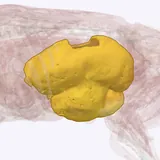
Gas collects in the dorsal sac of the rumen, in contact with the left paralumbar fossa. This is why distension is seen first in the left flank. In severe cases the whole abdomen is distended.
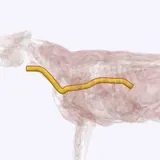
The oesophagus is the exit route for the gas. Obstruction in the neck or thorax prevents eructation and is a common cause of free-gas bloat. It is also the route for passing the stomach tube for diagnosis and treatment.
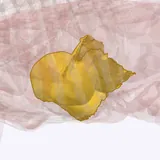
The cardia opens at the junction of the reticulum and the atrium of the rumen. Reticuloruminal contractions, controlled by the vagus nerve, move the contents and clear the cardia for eructation. Adhesions and abscesses from traumatic reticuloperitonitis can damage the vagus and cause recurrent bloat.
Clinical signs
- distension of the left flank, which can spread to the whole abdomen
- discomfort and frequent urination
- as it progresses, dyspnoea, open-mouth breathing, tongue protrusion and an extended head
- a tympanic sound on percussion of the left flank
In pasture frothy bloat animals may be found dead without signs having been seen.
In free-gas bloat distension is often moderate and recurrent.
Diagnosis
Diagnosis is clinical, from left flank distension and the history: change of pasture, diet, several animals affected.
Stomach tube
If gas escapes easily and the flank deflates, the bloat is free-gas. If little gas escapes and there is foam, it is frothy. The tube also locates an oesophageal obstruction.
Underlying cause of free-gas bloat
The oesophagus, the reticulum (foreign body tests, ultrasonography) and the thorax are examined.
Necropsy
In an animal that died of bloat the bloat line is seen in the oesophagus: the cervical portion is congested and the thoracic portion pale. It helps distinguish it from distension occurring after death.
Treatment and prevention
Frothy bloat
The animals are removed from the causative pasture or feed and given an oral antifoaming agent: poloxalene, vegetable or mineral oils, or detergents.
When death is imminent an emergency rumenotomy is performed. A trocar is of little use because the foam blocks it.
Free-gas bloat
The gas is removed with a stomach tube or, if that is not possible, with a trocar in the left paralumbar fossa. The cause is then treated, for example by removing the foreign body from the oesophagus.
In recurrent cases a temporary rumen fistula (rumenostomy) can be created.
Prevention on pasture
- offer hay before turnout
- use strip grazing to restrict intake
- keep grass dominant or use mixed grass-legume pastures
- use non-bloating legumes, such as sainfoin or birdsfoot trefoil
- give antifoaming agents daily during the risk season, or ionophores such as monensin where authorised
Prevention in the feedlot
Enough roughage in the ration, appropriate grain processing and gradual adaptation to concentrate-rich diets.
Drug use in food animals is subject to each country's regulations and to withdrawal periods for milk and meat.
Key studies
The evidence on bloat is old and limited. It comes mainly from feeding trials with small groups of rumen-fistulated cattle. No controlled trials on the treatment of clinical bloat (stomach tube, trocar, antifoaming agents) were found, so those recommendations rest on clinical experience and reference texts.
- Majak et al. (1995). Synthesis of two decades (1973–1993) of trials at a Canadian research station, with rumen-fistulated cattle grazing or fed freshly cut alfalfa. Every alfalfa cultivar tested caused bloat, while sainfoin, birdsfoot trefoil and cicer milkvetch (Astragalus cicer) did not. Bloat was associated with the soluble protein content of alfalfa, which falls as the plant matures, and not with saponins. Cation supplementation did not prevent it and, of all the additives tested, only poloxalene prevented it completely. It is a review of the centre's own trials.
- Gadberry et al. (2022). Meta-analysis of the effects of monensin in growing cattle on forage. The bloat analysis included 12 experiments with 23 comparisons. On bloat-prone pastures, monensin reduced incidence by 20% and severity by 0.7 points on the bloat score. It reduces the problem but does not eliminate it.
- Cheng et al. (1998). Narrative review of feedlot bloat; it is the standard reference and there are no higher-level studies. It explains that excess rapidly fermented carbohydrate favours acid-tolerant bacteria (Streptococcus bovis, Lactobacillus spp.), that low pH reduces rumen motility and that bacterial slime stabilises the foam. The amount of roughage, grain processing and cereal type, dietary adaptation and additives such as ionophores influence its occurrence.
Structures affected
References
- Constable PD, Hinchcliff KW, Done SH, et al. Veterinary Medicine: A Textbook of the Diseases of Cattle, Horses, Sheep, Pigs, and Goats, 11th ed. Elsevier (2017)
- Majak W, Hall JW, McCaughey WP. Pasture management strategies for reducing the risk of legume bloat in cattle. J Anim Sci 73:1493-8 (1995)
- Cheng KJ, McAllister TA, Popp JD, et al. A review of bloat in feedlot cattle. J Anim Sci 76:299-308 (1998)
- Gadberry S, Lalman D, White F, et al. Meta-analysis of the effects of monensin on growth and bloat of cattle on pasture. Transl Anim Sci 6:txac031 (2022)
- Merck Veterinary Manual: Bloat in Ruminants
See it in 3D on your iPhone
Peel the layers, spin the model, quiz yourself on it and stand it on your desk in AR. AnatomyCompass is coming to iPhone, iPad and Mac: get one email when it’s out.
Text adapted from Vet Atlas (CC BY-SA 4.0). Sources and licences. This veterinary text has not yet been reviewed by a veterinarian.