 AnatomyCompass
Abdominal aorta
Aorta abdominalis (pars abdominalis aortae) · Abdomen · Artery
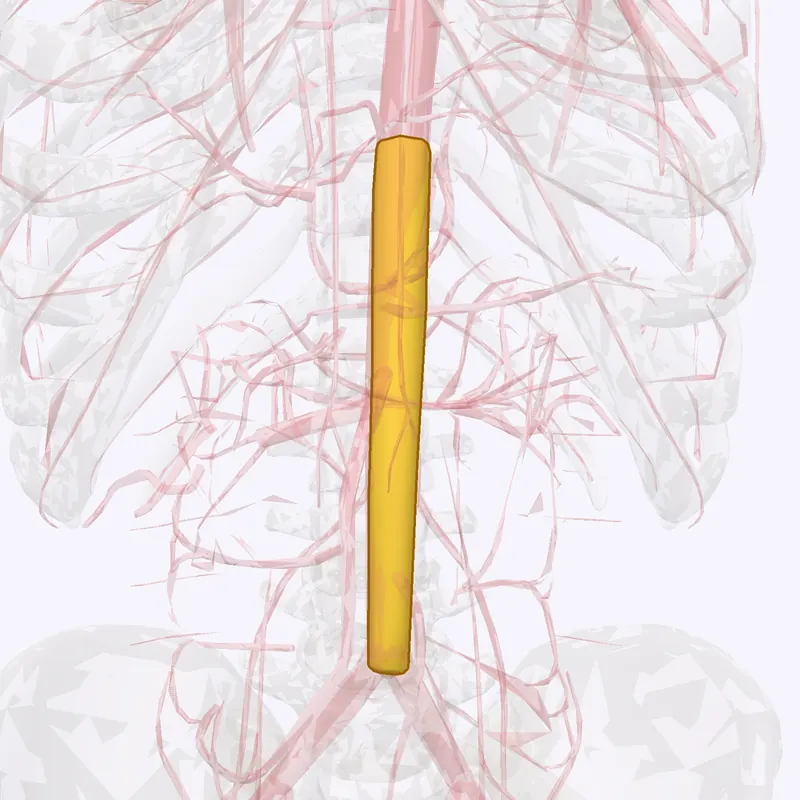
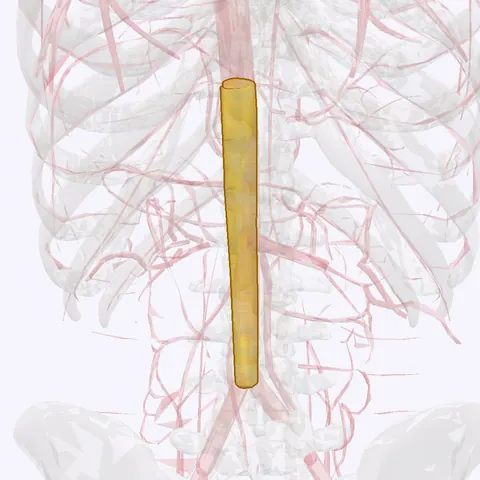
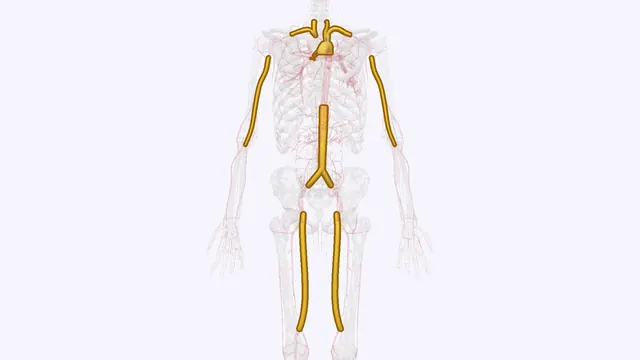
The aorta from the diaphragm to its bifurcation in front of L4.
Quick facts
- Latin name
- Aorta abdominalis (pars abdominalis aortae)
- Type
- Artery
- Body area
- Abdomen
Abdominal aorta: origin
Aortic hiatus of the diaphragm at T12.
Abdominal aorta: course
Down in front of the lumbar vertebrae, slightly left of the midline, beside the inferior vena cava; divides at L4 (roughly the level of the umbilicus).
Abdominal aorta: branches
Unpaired: coeliac trunk (T12), superior mesenteric (L1), inferior mesenteric (L3). Paired: inferior phrenic, middle suprarenal, renal, gonadal, lumbar. Ends as the common iliac arteries (and median sacral).
Abdominal aorta: supplies
Gut, liver, spleen, kidneys, adrenals, gonads, posterior abdominal wall, pelvis and legs.
3D views
Watch the video guide
Abdominal aorta: clinical note
Abdominal aortic aneurysms are usually below the renal arteries; screening by ultrasound is offered to men at 65 in the UK.
Questions about the abdominal aorta
What is the abdominal aorta?
The aorta from the diaphragm to its bifurcation in front of L4.
What are the branches of the abdominal aorta?
Unpaired: coeliac trunk (T12), superior mesenteric (L1), inferior mesenteric (L3). Paired: inferior phrenic, middle suprarenal, renal, gonadal, lumbar. Ends as the common iliac arteries (and median sacral).
See the abdominal aorta in 3D
Peel the layers, spin the model, quiz yourself on it and stand it on your desk in AR. AnatomyCompass is coming to iPhone, iPad and Mac: get one email when it’s out.

Other arteries: abdomen
Spotted something wrong? Tell us and we’ll fix it. This page is a study reference, not medical advice.