 AnatomyCompass
Subscapular artery
Arteria subscapularis · Upper limb · Artery
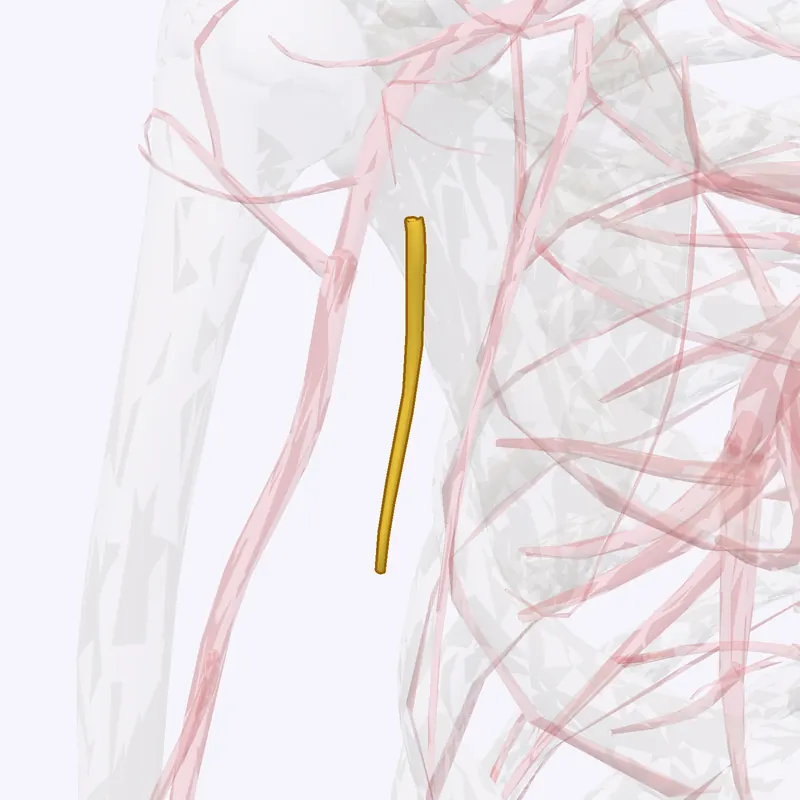
The largest branch of the axillary artery, dividing into circumflex scapular and thoracodorsal arteries.
Quick facts
- Latin name
- Arteria subscapularis
- Type
- Artery
- Body area
- Upper limb
Subscapular artery: origin
Third part of the axillary artery, at the lower border of subscapularis.
Subscapular artery: course
Down along the lower border of subscapularis.
Subscapular artery: branches
Circumflex scapular (through the triangular space) and thoracodorsal (with the thoracodorsal nerve to latissimus dorsi).
Subscapular artery: supplies
Subscapularis, latissimus dorsi, teres major, serratus anterior and the scapular anastomosis.
3D views
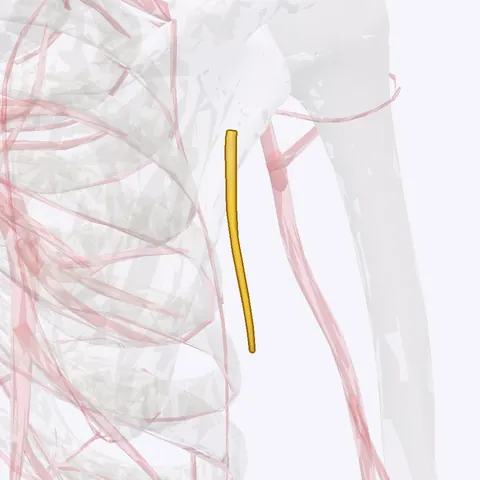
Subscapular artery: clinical note
The thoracodorsal artery is the pedicle of the latissimus dorsi flap.
Muscles fed by the subscapular artery
- Teres minorCircumflex scapular artery
- SubscapularisSubscapular artery
- Teres majorCircumflex scapular artery
- Latissimus dorsiThoracodorsal artery
Questions about the subscapular artery
What is the subscapular artery?
The largest branch of the axillary artery, dividing into circumflex scapular and thoracodorsal arteries.
What are the branches of the subscapular artery?
Circumflex scapular (through the triangular space) and thoracodorsal (with the thoracodorsal nerve to latissimus dorsi).
See the subscapular artery in 3D
Peel the layers, spin the model, quiz yourself on it and stand it on your desk in AR. AnatomyCompass is coming to iPhone, iPad and Mac: get one email when it’s out.
Other arteries: upper limb
- Subclavian artery
- Axillary artery
- Thoraco-acromial artery
- Circumflex humeral arteries
- Brachial artery
- Deep brachial artery
- Ulnar collateral arteries
- Radial artery
- Radial recurrent artery
- Ulnar artery
- Ulnar recurrent arteries
- Interosseous arteries
- Superficial palmar arch
- Deep palmar arch
- Dorsal carpal arch and metacarpal arteries
Spotted something wrong? Tell us and we’ll fix it. This page is a study reference, not medical advice.