 AnatomyCompass
Calcaneal tendon
Tendo calcaneus · Lower limb · Ligament
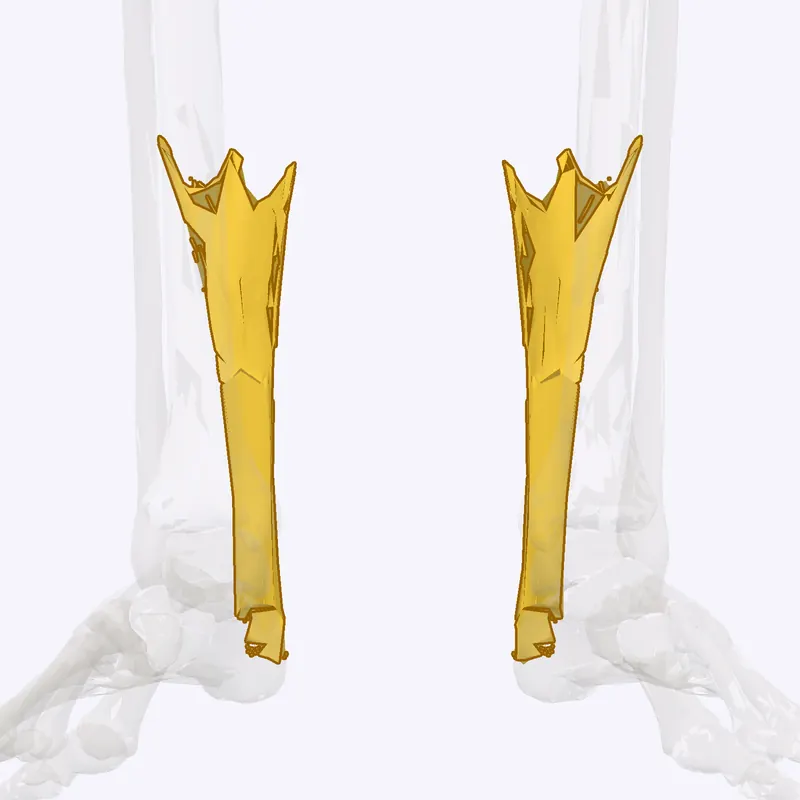
The thickest, strongest tendon in the body: the shared tendon of gastrocnemius and soleus.
Quick facts
- Latin name
- Tendo calcaneus
- Also called
- achilles tendon, heel cord, tendo calcanei
- Type
- Ligament
- Body area
- Lower limb
Calcaneal tendon: attachments
Gastrocnemius and soleus above; the middle of the posterior surface of the calcaneus below.
Calcaneal tendon: function
Transmits the pull of the calf muscles to plantarflex the ankle in walking, running and jumping.
Calcaneal tendon: relations
Plantaris tendon runs along its medial side; a bursa separates it from the upper calcaneus; the sural nerve and small saphenous vein lie lateral to it.
Calcaneal tendon: nearby
Its blood supply is poorest 2–6 cm above the insertion.
3D views
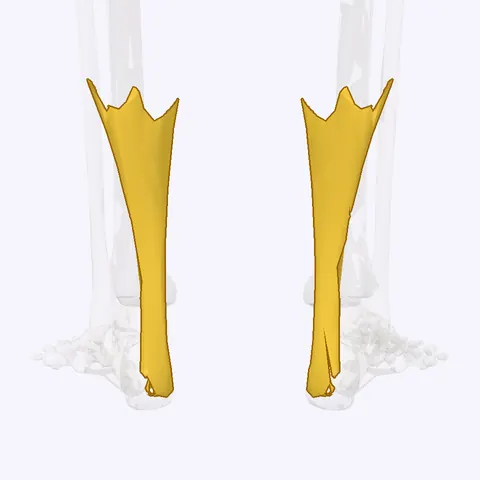
Calcaneal tendon: clinical note
Ruptures usually 2–6 cm above the heel; Simmonds' (Thompson's) test: squeezing the calf fails to plantarflex the foot.
Questions about the calcaneal tendon
What is the calcaneal tendon?
The thickest, strongest tendon in the body: the shared tendon of gastrocnemius and soleus.
What does the calcaneal tendon do?
Transmits the pull of the calf muscles to plantarflex the ankle in walking, running and jumping.
See the calcaneal tendon in 3D
Peel the layers, spin the model, quiz yourself on it and stand it on your desk in AR. AnatomyCompass is coming to iPhone, iPad and Mac: get one email when it’s out.
Other ligaments: lower limb
Spotted something wrong? Tell us and we’ll fix it. This page is a study reference, not medical advice.