Urinary bladder
Vesica urinaria · Pelvis · Organ
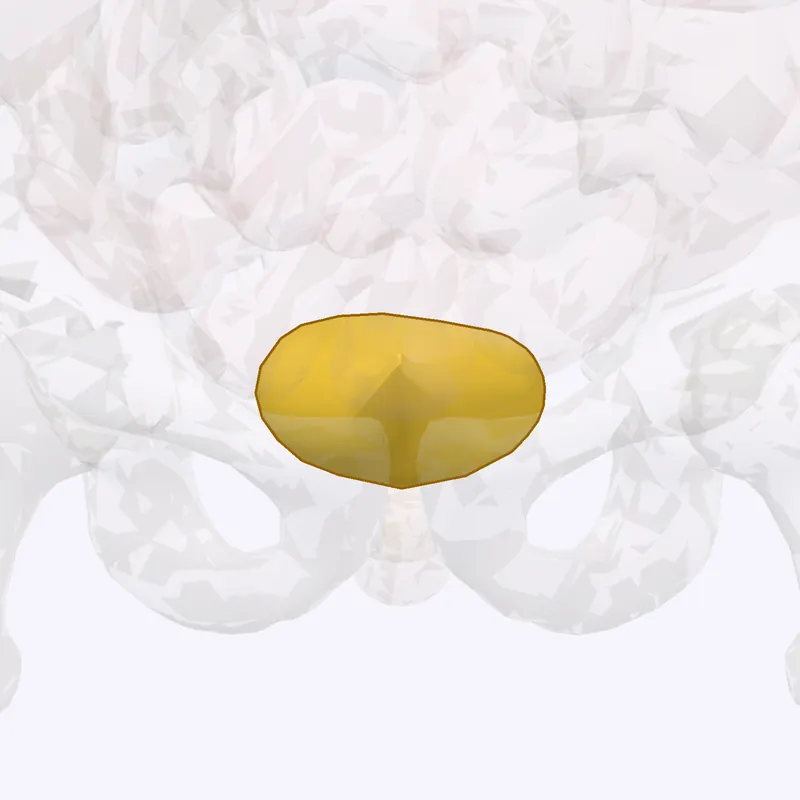
A muscular reservoir for urine behind the pubic symphysis.
Quick facts
- Latin name
- Vesica urinaria
- Also called
- Bladder
- Type
- Organ
- Body area
- Pelvis
Urinary bladder: location
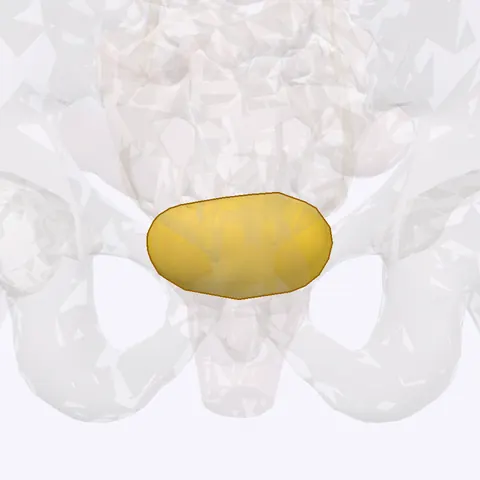
In the pelvis behind the pubic bones; rises into the abdomen when full.
Urinary bladder: function
Stores urine (comfortably about 400–500 mL) and empties it through the urethra (detrusor muscle).
Urinary bladder: blood supply
Superior and inferior vesical arteries from the internal iliac artery.
Urinary bladder: nerve supply
Parasympathetic pelvic splanchnic nerves (S2–S4) contract the detrusor; sympathetic (T11–L2) relaxes it.
Urinary bladder: relations
In men: rectum, seminal vesicles behind, prostate below; in women: uterus and vagina behind.
3D views
Urinary bladder: clinical note
A full bladder can be reached above the pubis without entering the peritoneum (suprapubic catheter).
Questions about the urinary bladder
What is the urinary bladder?
A muscular reservoir for urine behind the pubic symphysis.
Where is the urinary bladder?
In the pelvis behind the pubic bones; rises into the abdomen when full.
What does the urinary bladder do?
Stores urine (comfortably about 400–500 mL) and empties it through the urethra (detrusor muscle).
What is the blood supply of the urinary bladder?
Superior and inferior vesical arteries from the internal iliac artery.
See the urinary bladder in 3D
Peel the layers, spin the model, quiz yourself on it and stand it on your desk in AR. AnatomyCompass is coming to iPhone, iPad and Mac: get one email when it’s out.
Other organs: pelvis
Spotted something wrong? Tell us and we’ll fix it. This page is a study reference, not medical advice.