 AnatomyCompass
Popliteal artery
Arteria poplitea · Lower limb · Artery
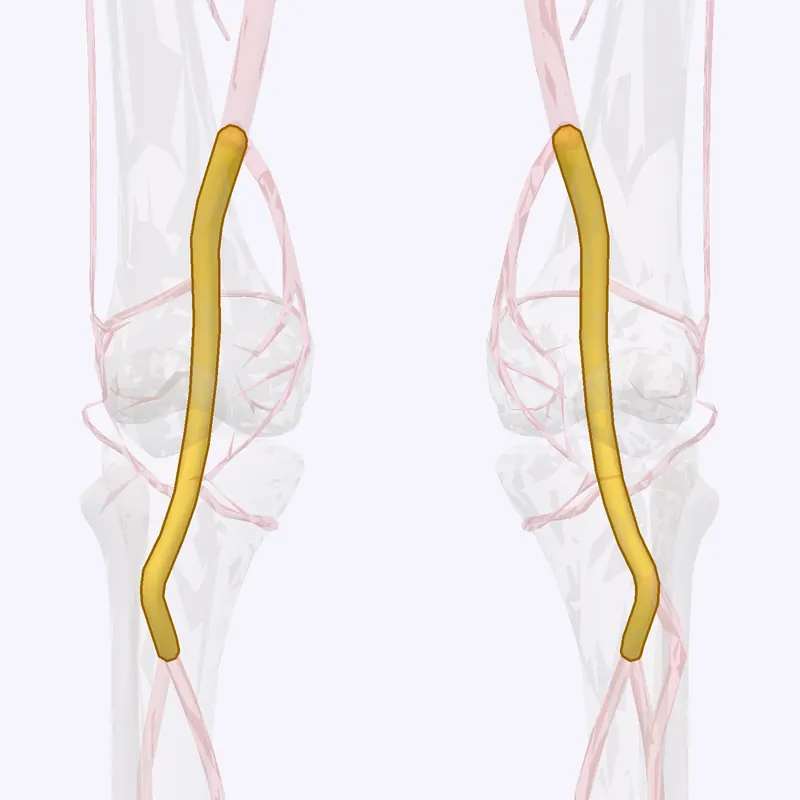
The deepest structure in the popliteal fossa, lying against the femur and knee capsule.
Quick facts
- Latin name
- Arteria poplitea
- Type
- Artery
- Body area
- Lower limb
Popliteal artery: origin
Continues the femoral artery at the adductor hiatus.
Popliteal artery: course
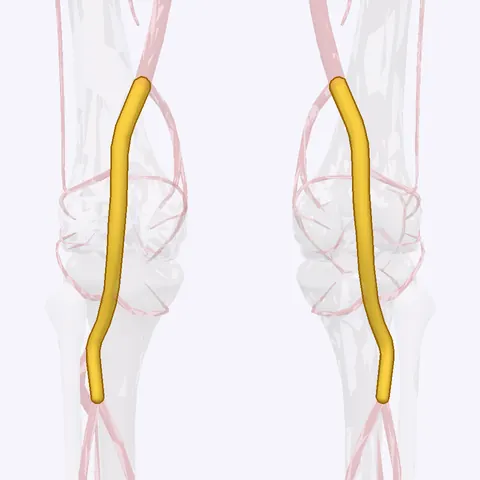
Down through the popliteal fossa, deep to the popliteal vein and tibial nerve, to the lower border of popliteus.
Popliteal artery: branches
Genicular arteries (five), muscular and sural branches; ends as the anterior and posterior tibial arteries.
Popliteal artery: supplies
Knee joint, gastrocnemius, soleus and the leg below.
3D views
Popliteal artery: clinical note
Knee dislocations can tear it; the pulse is hard to feel because it's so deep. Popliteal aneurysms are often bilateral.
Muscles fed by the popliteal artery
Questions about the popliteal artery
What is the popliteal artery?
The deepest structure in the popliteal fossa, lying against the femur and knee capsule.
What are the branches of the popliteal artery?
Genicular arteries (five), muscular and sural branches; ends as the anterior and posterior tibial arteries.
See the popliteal artery in 3D
Peel the layers, spin the model, quiz yourself on it and stand it on your desk in AR. AnatomyCompass is coming to iPhone, iPad and Mac: get one email when it’s out.

Other arteries: lower limb
Spotted something wrong? Tell us and we’ll fix it. This page is a study reference, not medical advice.