Iliococcygeus
Musculus iliococcygeus · Pelvic floor muscles · Trunk
Iliococcygeus (Musculus iliococcygeus) is one of the pelvic floor muscles. Below: its origin and insertion, what it does, its nerve and blood supply, how to find it, a stretch and an exercise, with 3D views.
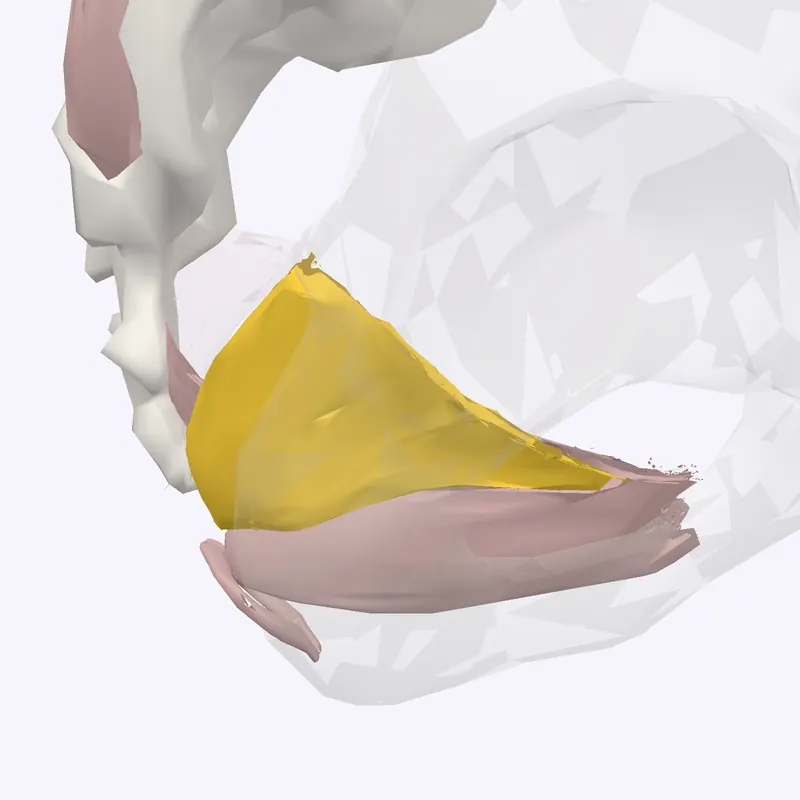
Quick facts
- Latin name
- Musculus iliococcygeus
- Muscle group
- Pelvic floor muscles
- Body region
- Trunk
- Movements
- Pelvic floor contraction
- Bones it attaches to
- Hip bone
Iliococcygeus: origin and insertion
- Origin
- Tendinous arch of levator ani (on the obturator internus fascia) and the ischial spine.
- Insertion
- Anococcygeal body (raphe) and the side of the coccyx.
Iliococcygeus: function and action
Forms the thin, flatter back part of the pelvic diaphragm; supports the pelvic organs. Part of levator ani.
- Pelvic floor contraction Synergist
Iliococcygeus: nerve supply (innervation)
Nerve to levator ani (S3–S4) from the sacral plexus, with the inferior rectal branch of the pudendal nerve (S2–S4).
Iliococcygeus: blood supply
Inferior gluteal, inferior vesical and internal pudendal arteries (branches of the internal iliac).
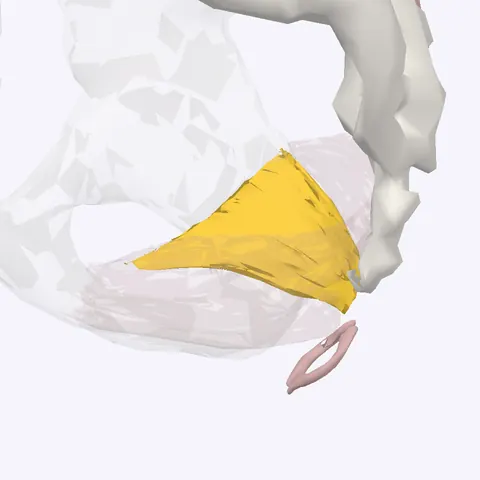
3D views
Iliococcygeus: exercises to strengthen it
Pelvic floor muscle training: squeeze and lift as if stopping wind and urine, hold up to 10 seconds, 10 times, plus 10 quick squeezes, three times a day.
Iliococcygeus: pain, injury and clinical notes
Often thin or partly replaced by fibrous tissue; overactivity is one cause of chronic pelvic pain.
Questions about the iliococcygeus
Where does the iliococcygeus attach?
It arises from: Tendinous arch of levator ani (on the obturator internus fascia) and the ischial spine. It inserts into: Anococcygeal body (raphe) and the side of the coccyx.
What does the iliococcygeus do?
Forms the thin, flatter back part of the pelvic diaphragm; supports the pelvic organs. Part of levator ani.
Which nerve supplies the iliococcygeus?
Nerve to levator ani (S3–S4) from the sacral plexus, with the inferior rectal branch of the pudendal nerve (S2–S4).
How do you strengthen the iliococcygeus?
Pelvic floor muscle training: squeeze and lift as if stopping wind and urine, hold up to 10 seconds, 10 times, plus 10 quick squeezes, three times a day.
See the iliococcygeus in 3D
Peel the layers, spin the model, quiz yourself on it and stand it on your desk in AR. AnatomyCompass is coming to iPhone, iPad and Mac: get one email when it’s out.
Other muscles in this group: Pelvic floor muscles
Spotted something wrong? Tell us and we’ll fix it. This page is a study reference, not medical advice.