 AnatomyCompass
Musculocutaneous nerve
Nervus musculocutaneus · Upper limb · Nerve
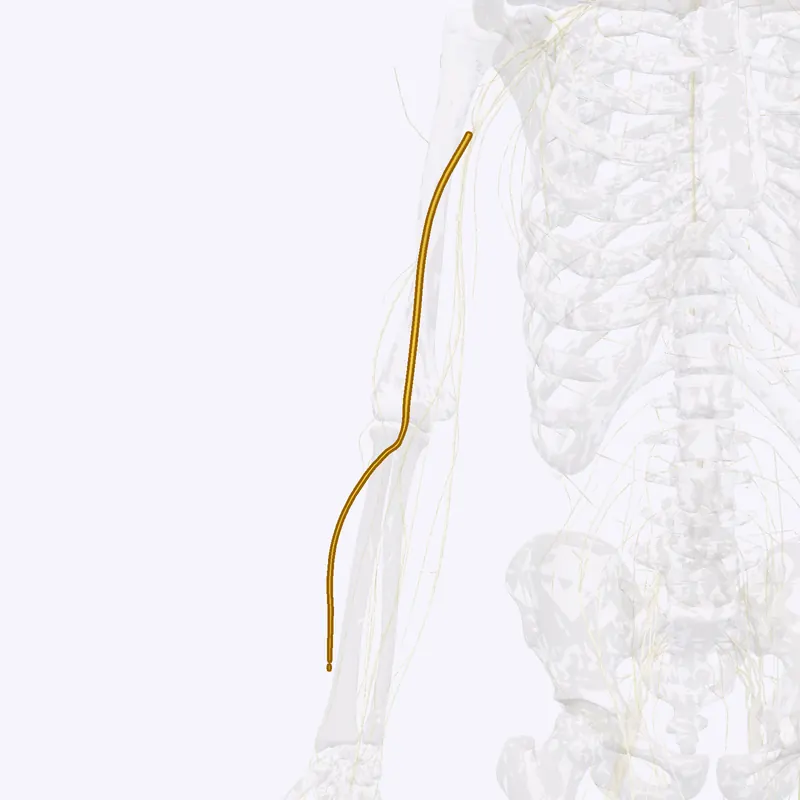
Supplies the flexors of the front of the arm and the skin of the lateral forearm.
Quick facts
- Latin name
- Nervus musculocutaneus
- Type
- Nerve
- Body area
- Upper limb
Musculocutaneous nerve: roots
C5–C7, lateral cord of the brachial plexus.
Musculocutaneous nerve: course
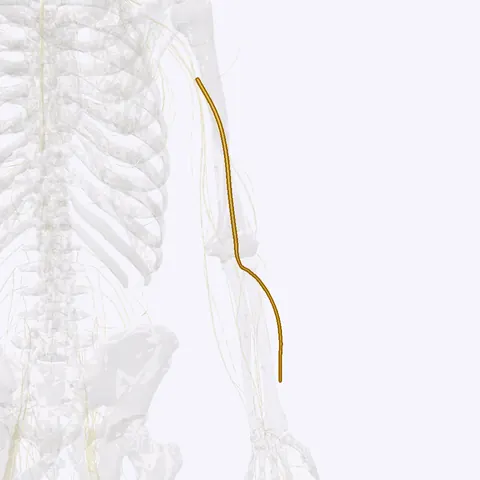
Pierces coracobrachialis, runs down between biceps and brachialis, and emerges lateral to the biceps tendon as the lateral cutaneous nerve of the forearm.
Musculocutaneous nerve: motor
Coracobrachialis, biceps brachii, brachialis (most).
Musculocutaneous nerve: sensory
Lateral forearm (lateral cutaneous nerve of the forearm).
Musculocutaneous nerve: injury sign
Weak elbow flexion and supination, lost biceps reflex, numb lateral forearm.
3D views
Watch the video guide
Musculocutaneous nerve: clinical note
Rarely injured alone because it's well protected; brachioradialis still flexes the elbow.
Muscles supplied by the musculocutaneous nerve
- Biceps brachiiMusculocutaneous nerve (C5–C6)
- CoracobrachialisMusculocutaneous nerve (C5–C7)
- BrachialisMusculocutaneous nerve (C5–C6); a small part from the radial nerve
Questions about the musculocutaneous nerve
What is the musculocutaneous nerve?
Supplies the flexors of the front of the arm and the skin of the lateral forearm.
See the musculocutaneous nerve in 3D
Peel the layers, spin the model, quiz yourself on it and stand it on your desk in AR. AnatomyCompass is coming to iPhone, iPad and Mac: get one email when it’s out.
Other nerves: upper limb
Spotted something wrong? Tell us and we’ll fix it. This page is a study reference, not medical advice.