 AnatomyCompass
Suprascapular nerve
Nervus suprascapularis · Upper limb · Nerve
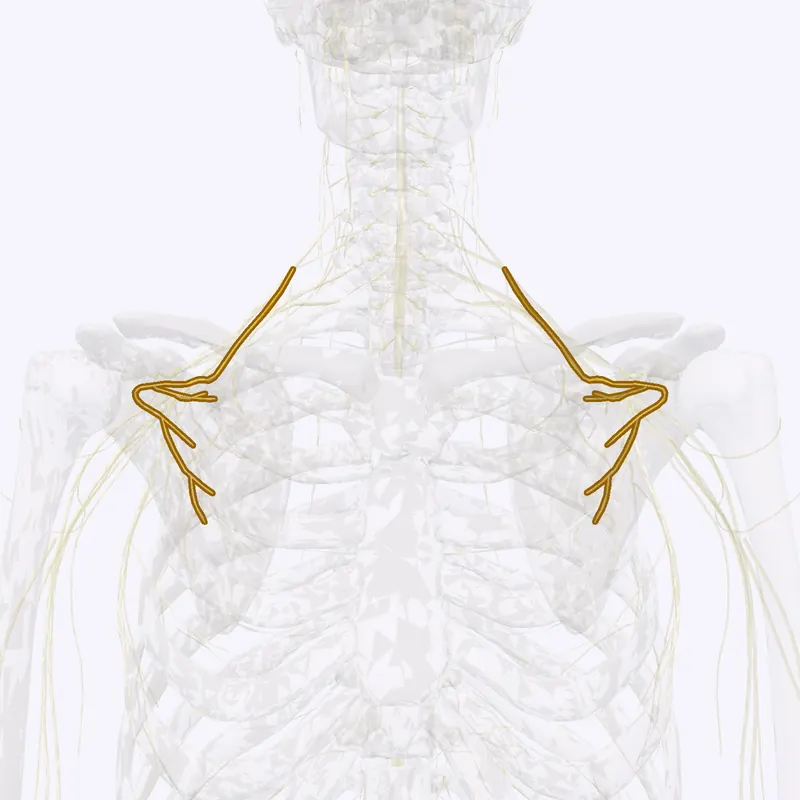
A branch of the upper trunk of the brachial plexus that supplies supraspinatus and infraspinatus.
Quick facts
- Latin name
- Nervus suprascapularis
- Type
- Nerve
- Body area
- Upper limb
Suprascapular nerve: roots
C5–C6, from the upper trunk of the brachial plexus (sometimes C4).
Suprascapular nerve: course
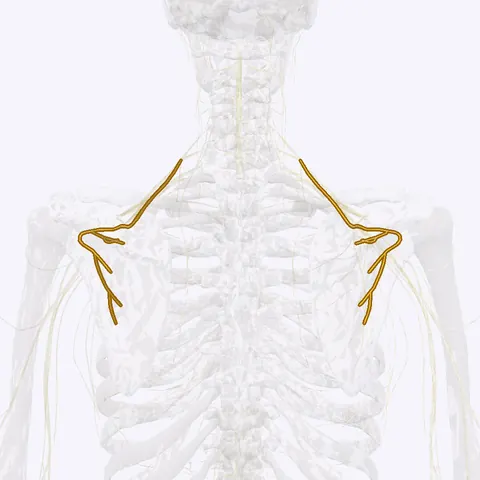
Across the posterior triangle of the neck, under trapezius to the scapula; through the suprascapular notch below the superior transverse scapular ligament (the artery passes above it), then round the spinoglenoid notch into the infraspinous fossa.
Suprascapular nerve: motor
Supraspinatus and infraspinatus.
Suprascapular nerve: sensory
Shoulder and acromioclavicular joints; little or no skin.
Suprascapular nerve: injury sign
Weak start of abduction and weak lateral rotation, with wasting above and below the spine of the scapula.
3D views
Suprascapular nerve: clinical note
Entrapment at the suprascapular notch weakens both muscles; at the spinoglenoid notch (often by a ganglion cyst from a labral tear) only infraspinatus. A suprascapular nerve block relieves shoulder pain.
Muscles supplied by the suprascapular nerve
- SupraspinatusSuprascapular nerve (C5–C6)
- InfraspinatusSuprascapular nerve (C5–C6)
Questions about the suprascapular nerve
What is the suprascapular nerve?
A branch of the upper trunk of the brachial plexus that supplies supraspinatus and infraspinatus.
See the suprascapular nerve in 3D
Peel the layers, spin the model, quiz yourself on it and stand it on your desk in AR. AnatomyCompass is coming to iPhone, iPad and Mac: get one email when it’s out.
Other nerves: upper limb
Spotted something wrong? Tell us and we’ll fix it. This page is a study reference, not medical advice.